Do you want to know how long do penguins live? Penguins are the flightless birds that are associated with the family of Spheniscidae. These flightless birds are the inhabitants of Southern Hemisphere especially in Antarctica. Penguins are perfectly adaptable for their life in water. Nearly all penguins feed on fish, squid, and krill. Most of their lives are spent underwater. A handful number of these species are also found in the south of Antarctica. There are some that lives in the moderate zone, adjacent to the equator. Galapagos penguin is one of them. The largest penguin species is the Emperor penguin that can grow to a size of 1.1 meters (3 ft 7 in). The smallest species is Little Blue Penguin that stands around 40 cm (16 inches). It follows that in the prehistoric times, there lived enormous-sized penguins that could be as heavy as adult humans. Penguins are also known to reside across the sub-antarctic regions.
How Long Do Penguins Live
Here we have listed down the life spans of the different types of penguins:
How Long Do King Penguins Live
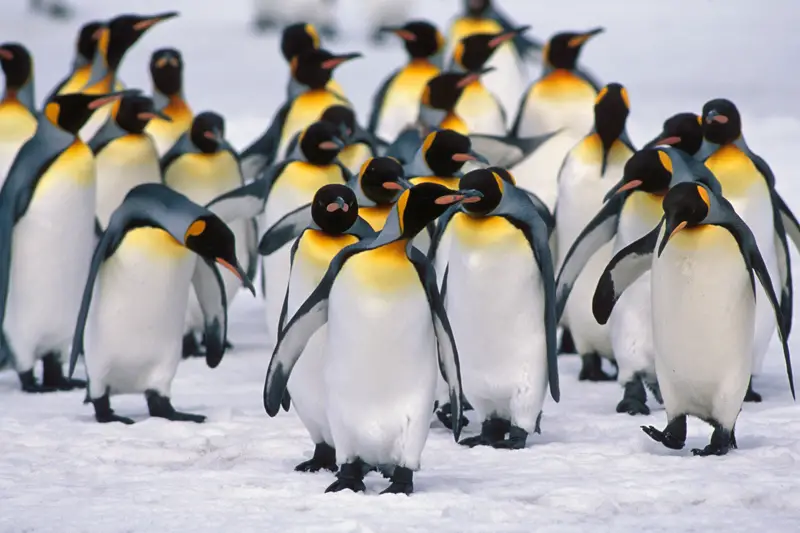
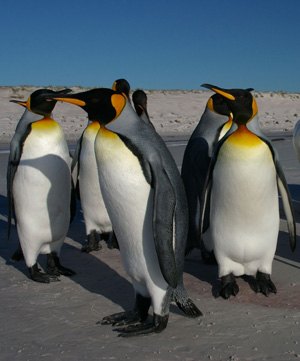
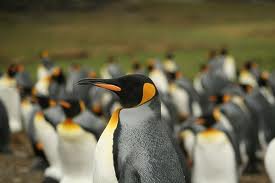
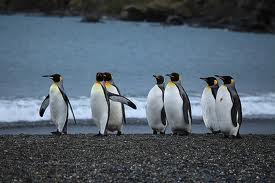
King penguins are the second largest extant penguin species comes only after the Emperor penguins. They can grow to a length of 90 cm (3.0 feet), with the weight measuring at 11 – 16 kg (24 – 35 lb). The average lifespan of king penguins is 15 to 20 years in the wild.
How Long Do Emperor Penguins Live
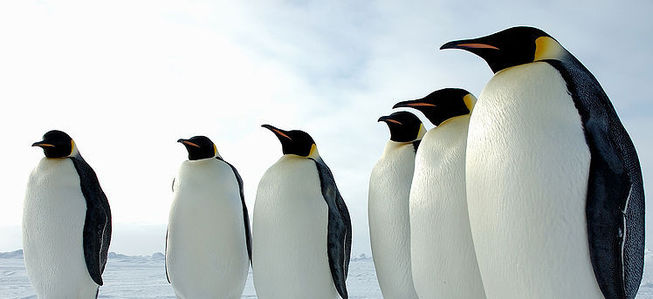
Emperor penguins are by far the largest living species of penguins averaging 45 inches (115 centimeters) in length. The weight of emperor penguins measure around 88 lbs (40 kg). They group together to get rid of wind and conserve warmth. The average lifespan of emperor penguins is 15 to 20 years in the wild.
How Long Do Adelie Penguins Live
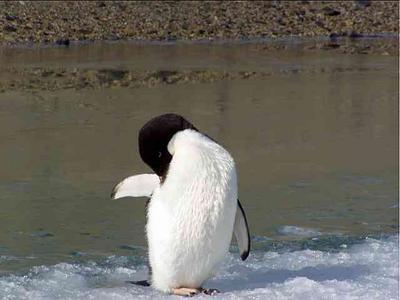
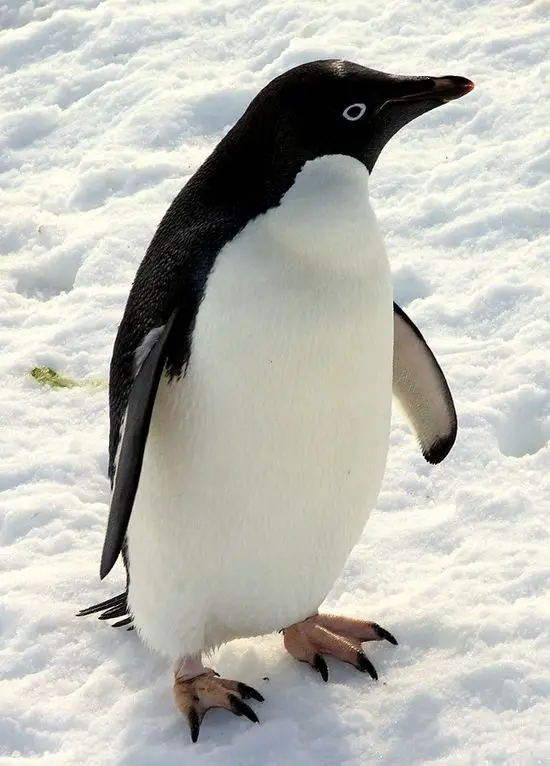
Adelie penguins are mostly found on the Antarctic continent and on several small coastal islands. They can grow to a size of about 27.5 inches (70 cm), with the weight averaging 8.5 – 12 lbs (4 – 5.5 kg). The average lifespan of adelie penguins is 20 years in the wild.
How Long Do Chinstrap Penguins Live
Chinstrap penguins can grow to a size of 68 cm (27 inches), with the weight measuring at 6 kg (13.2 lbs. The females are smaller and less heavy as compared to the males. The typical lifespan of chinstrap penguins is 15 to 20 years in the wild.
How Long Do Gentoo Penguins Live
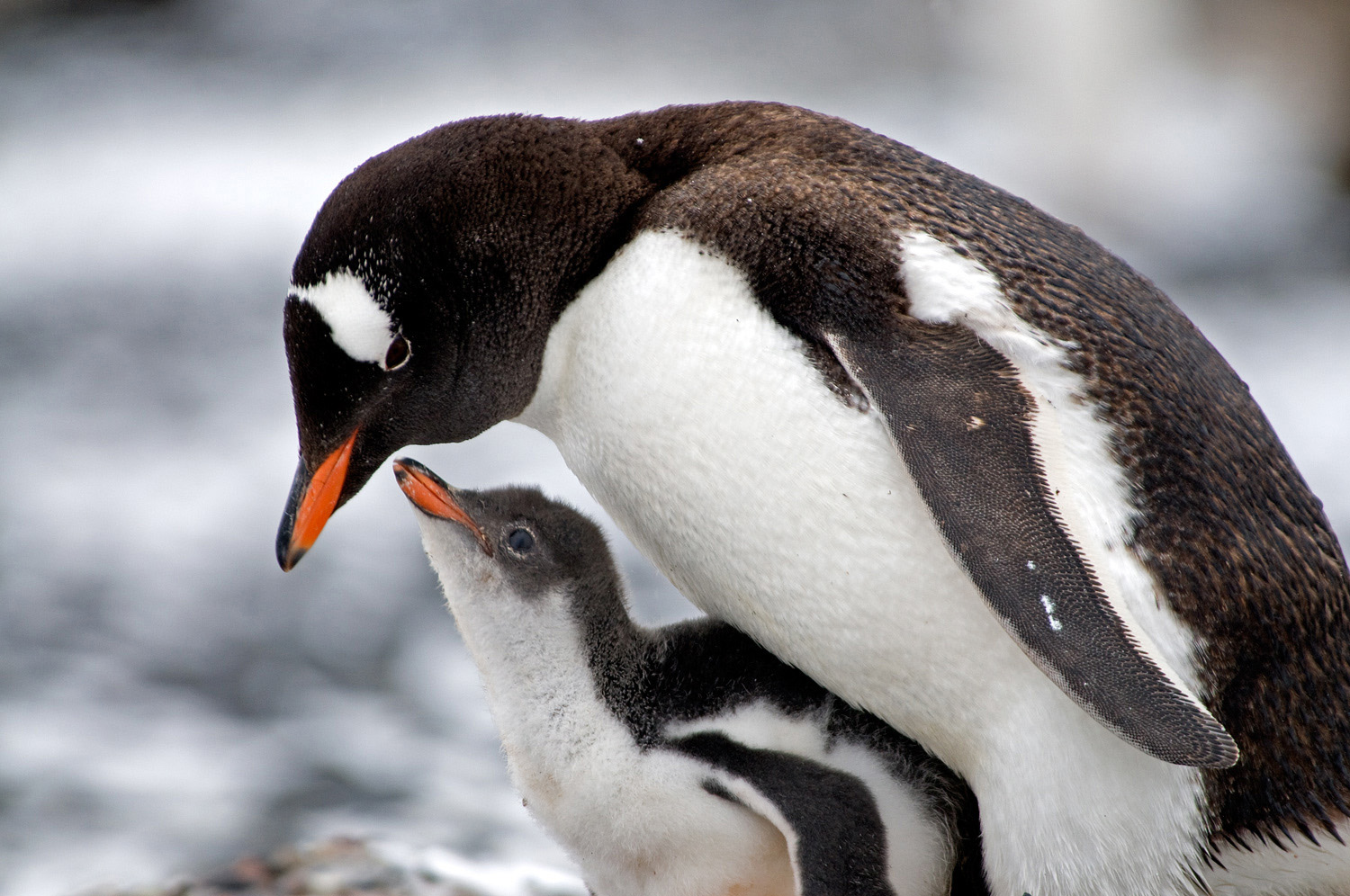
Gentoo penguins can be easily characterized by their flamboyant reddish-orange beaks. These flightless birds can grow to a length of 30 inches (76 cm). The average lifespan of these penguins is 15 to 20 years in the wild.
How Long Do Rockhopper Penguins Live
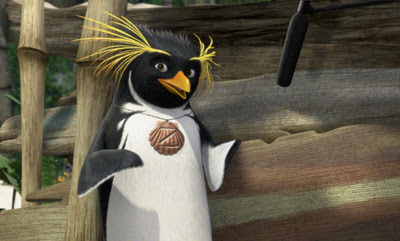
Rockhopper penguins display an irrelevant crest of spiny yellow and black feathers that embellishes their heads. They can grow to a size of 22 inches (55 cm). They weigh around 4.4 – 6.6 lbs (2 – 3 kg). The average lifespan of these penguins is 10 years in the wild.
Now you are aware about How long do penguins live, get to know more about penguins:
Do penguins mate for life? In this article I’ve attempted to answer this question with several proofs. Let me explain you some relevant facts about penguins mating and reproduction cycle and how it happens to be different from rest of the birds whether flightless or not. Penguins are primarily known to breed in large colonies except few species such as Yellow-eyed penguins and Fiordland penguins. There may be as much breeding pairs as hundreds or even thousands of individuals in a single colony. This is particularly true in case of Chinstrap Penguins and Macaroni, and King Penguins. One of the main reasons of their greater social interaction is massive gathering in colonies. In general, penguins lay only one brood with the exception of Little Penguin that can lay 2 – 3 broods in one season.
Do Penguins Mate For Life
Depending entirely on species, penguins generally mate for life. These flightless birds form monogamous pairs with the arrival of breeding season even though the rate with which the same pair recouples differs significantly. Nearly all penguins lay 2 eggs in a clutch with the exception of large penguins; king and emperor penguins that only lays one egg. Both males and females share the burden of incubation. Although the penguin’s yolk is too large to be kept in complete safety, they try their level best to keep it under their feathers. The yolk embraces 22% to 31% of the egg. One of the strange penguins behavior is that if a mother’s chick is lost, it attempts to sneak another mother’s chicks which is often difficult as those mothers aren’t necessarily away.
Do King Penguins Mate For Life
(Do Penguins Mate For Life)
The king penguins begin to breed at the age of 3; however they do not breed then and the first breeding (normally) starts after they reach 6 years of age. These large flightless birds have for the most part one mate for each year, and stay devoted to that mate. Nonetheless, the loyalty percent age is only 29%. The extended breeding cycle may participate to this much low rate. King penguins have one of the longest breeding cycle amongst penguin species which can last for 14 to 16 months. The pairs are believed to breed each year only once. The penguin’s reproductive cycle starts in September to the end of November. While the males march towards the sea for about 3 weeks, females will incubate their pale greenish eggs. The period of incubation lasts for almost 2 months and both parents contribute towards incubation with shifts of 6 – 18 days. King penguins gather in large colonies comprising almost 100,000 individuals in a single colony. The juveniles need further 14 – 16 months before they’d be able to march towards the sea for foraging purposes.
Do Emperor Penguins Mate For Life
(Do Penguins Mate For Life)
With the beginning of Autumn season in Antarctic, most of the penguins head north for warm waters with the exception of emperor penguin. Emperor penguins will head towards south instead to contribute towards incubating, mating, courting and finally nurturing their chicks. During the mating period penguins will do different things. This time the male emperor penguins will bear the burden of hatching eggs and not female. Not only the male will hatch eggs but will also defend it against the predators for about 55 – 60 days.
Bird lovers often ask over do penguins have feathers which is why I’ve decided to bring some important and rarely known facts about these flightless birds. Penguin is one of those flightless birds that are endemic to Polar Regions such as Antarctica with perfect adaptability to sustain in extreme cooler days of the year. Penguins are amazingly adapted to aquatic life. These flightless birds have flippers that are often used for swimming and not for the birds flight. They are swift in water with the swimming speed of about 6 – 12 km/h (3.7 – 7.5 mph), although they are also known to occasionally reach the velocity of 27 km/h (17 mph). There is an air layer contained in the plumage which insulates the penguins in cold-freeze water. They employ their wings and tails to maintain a sheer balance to walk on land.
Do Penguins Have Feathers
Yes, penguins do have feathers or furs. They are covered with a bulky layer of insulating feathers that keeps them hot in water and for the fact that heat-loss is much greater in water than is in the air. The penguins specialized feathers are shiny and evenly overlaps to develop a thick layer of defense. All these thousands of feathers operate as a insulator; however, when penguins feel too hot they tend to flap their wings and release the insulating layer. In general, there are two layers of feathers; the blubber (fat layer) and a thin layer. Besides, these feathers are classified into two sections; a stiff section and a downy one. The downy section trapped air thereby insulating bird’s body from the intense cold. Under water, the feathers bent due to the water pressure against the penguin’s body thereby tightening the air layer and limiting the insulating effect. That is why heat-loss in water is greater than is in air. The downy part is closer to the body and entraps the air-layer.
The small penguin species are not known to dive deep into the water and they take hold of their prey at the water surface. Emperor penguins dive have been recorded to reach a depth of about 565 meters (1,870 feet) which lasts for 20 – 22 minutes. Penguins also slide on their bellies or waddle on their feet. The belly-sliding is called tobogganing which helps in conserving energy while moving in an agile manner. These flightless birds also jump from their both to cross some rocky terrain or cross steep. Not only do penguins have feathers but they have flippers too that supports them while swimming or walking on land. Penguins are capable to drink saltwater for the fact that their superorbital glands filter excess salt from the bloodstream.
There are around 70 feathers for each square which counts to 11 feathers for each square centimeter which is greater than any bird. They molt their feathers only once in a year. During this time period, they do not swim nor eat anything. The old feathers are replaced by the new ones and in this way penguins are kept warm all throughout the year. These old feathers are shed in badges. The molting period lasts for almost a month although it can be lesser or greater, depending on species. Apart from molting, penguins also undergo preening in which they tend to preen their fellow penguin’s feathers. The preening serves penguins’ health to a great extent.
After watching the movies “Happy Feet”, “Madagascar” and the “Mr. Popper’s Penguins”, you or your child might wonder that “How Many Types of Penguins are There in this world. So whether you got curious after watching penguin movies or simply want to know the actual number of penguin species and their names then you have just come to the right place. We have a complied a brief overview as to how may types of penguins are there and linked them to the articles on our website in case if you want to know more about them.
How Many Types of Penguins are There
According to theInternational Penguin Conservation Working Group (IPCW), there are 17 types of penguins in this world. Some people argue that there are 20 species of penguin by counting the subspecies of Rockhopper penguins as a different species.
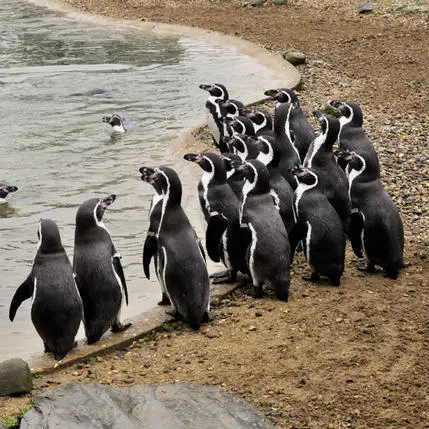
This article displays some of the most interesting Humboldt penguin facts.The Humboldt Penguin belongs to the Spheniscidae family and is considered to be a South American Bird. Spheniscus humboldti is actually the Latin name of these birds. These types of penguin usually breed in the coastal areas of Chile and Peru. These birds are also believed to be the cousins of African Penguins and Galapagos Penguins. Alexander von Humboldt was the first explorer to discover this penguin specie which is why it is named as Humboldt penguin. Peruvian Penguin is the other name of these birds.
These types of penguins are of medium size and can grow to a size of 56 – 70 cm (22 – 28 inches), with a weight of about 3.6 – 5.9 kg (8 – 13 lbs). The undersides are blackish-grey together with the black ear-coverts. Humboldt penguins reside in the burrowing holes, rocky coasts and for a while they also employ deserted places like caves as their habitats.
Humboldt Penguin Facts
The length of these types of penguins is around 56 – 70 cm (22 – 28 inches).
Humboldt penguins weigh about 3.6 – 5.9 kg (8 – 13 lbs).
There is a white lineage that runs around the eye.
The lifespan of these penguins is about 15 – 20 years.
Where Do Humboldt Penguins Live
These birds mostly reside in rocky coasts, caves, and holes. They are commonly found in the Pacific coast.
These birds also drink salt water because of the superorbital glands that separate out the excess salt from water. They are not the best swimmers. While swimming, these birds have a speed of 32 km/h (20 mph).
Humboldt Penguin Facts about its Threats
With the increasing global warming and fish-hunting by humans, the population of these species has significantly declined over the years. Humans mainly hunt these penguins in order to meet diet needs. Biologists maintain that Humboldt penguins shall soon become extinct if these factors continue to prevail in the same fashion. Habitat destruction is another major cause of its extinction. The population of these birds ranges from 3,300 to 12,000. However, they had been declared to be an endangered species in U.S back in 2010. Predators of these species include sea lions, leopard seal, whales, sharks; whereas land animals such as foxes, dogs, snakes and cats are responsible for the stolen eggs.
Reproduction Facts about Humboldt Penguin
Females lay 2 eggs after an interval of 2 – 4 days. Both parents are responsible for incubating eggs.
The incubation (keeping warm) period lasts for 39 – 45 days.
The chicks remain with their parents for about 70 – 90 days.
Humboldt penguins become fully mature after 3 years.
This article is about useful Gentoo penguin facts that are not easily available. These long-tailed penguins belong to the family of Pygoscelis papua and are considered to be the close relatives of Chinstrap Penguins. Johann Reinhold was the first explorer to discover Gentoo penguins back in 1781. They are primarily found in the Falkland Islands. The gentoo penguins gather on an ice-free surface where they form breeding colonies. These birds are adept to form their colonies at shoreline, with special preference is given to the coastal regions that is dominated with tufts of grass especially when it comes to forming colonies. Gentoo penguins commonly breed in sub-Antarctic islands. The major islands where these flightless birds form colonies include Macquarie Islands, South Georgie, Antarctic Peninsula, Heard Islands, Falkland Islands, and South Shetland Islands. With the total population of about 300,000, gentoo penguins tend to occupy most of the Antarctic regions.
Gentoo Penguin Facts
There is wide stripe that runs across the head-top.
Gentoo penguins are 51 – 90 cm (20 – 36 inches) long.
They weigh around 8.5 kg (19 lb), with the minimum weight is 4.9 kg (10.8 lb). They are believed to be the third largest species after the Emperor and King Penguins.
These birds have orange bill together with pinkish feet.
The females weigh around 8.2 kg (18 lb) before moulting.
Some birds weigh around 700 grams (1.5 lb). Southern Gentoo Penguins are slightly shorter than the Northern Gentoo Penguins, the length of the former is about 75 – 80 cm. Birds of South are 10 cm shorter than the northern penguins.
A Gentoo penguin is capable to swim at a speed of 36 km/h and is arguably the fastest swimming bird.
Gentoo Penguins
Gentoo Penguin Facts about its Breeding
These penguins lay eggs on an ice-free surface. These birds mainly breed in the Sub-Antarctic Islands, Falkland Islands, Antarctic Peninsula, Hear Islands, South Georgia Islands and Macquarie Island.
There are more than 300,000 breeding pairs of Gentoo penguins.
They lay eggs and cover them by the piles of stones or sometimes with grass and weeds. The females lay 2 eggs. These eggs weigh around 500 grams.
Males and females incubate eggs after regular intervals. The hatching period lasts ranges from 34 – 36 days.
The parents look after their chicks for about 30 days. After 80 – 100 days, these juveniles begin to travel toward sea.
What Do Gentoo Penguins Eat
These penguins predominantly feed on small fish, squid, krill, and crustaceans. Fish covers more than 15% of the Gentoo Penguins diet.
Gentoo Penguin Facts about its Threats
Sea lions, orca and leopard seals are the most common predators that are mainly responsible for these penguins’ deaths. Skua normally steals Gentoo penguins’ eggs.
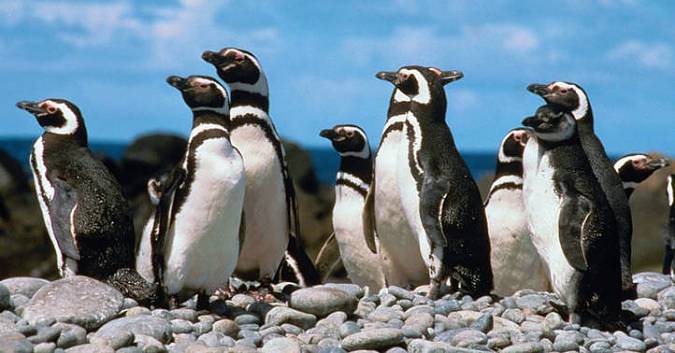
This article unleashes some of the handy magellanic penguin facts. The Magellanic Penguin belongs to the family of Spheniscus magellanicus and is native to South America and Brazil. These types of penguins largely breed in the Argentine, Chile, Rio de Janeiro, and Falkland Islands apart from the South America. These medium sized flightless birds are considered to be the first cousins of African, Galapagos, and Humboldt Penguins.
Magellanic Penguin Facts
These species are 61 – 76 cm (24 – 30 inches) long.
Magellanic penguins weigh around 2.7 – 6.5 kg (5.9 – 14.3 lbs).
Females are slightly shorter as compared to the males.
They have almost black and white plumage.
The lifespan is about 25 years in the wild whereas under captivity they can live up to 30 years.
What Do Magellanic Penguins Eat?
These birds primarily feed on sardines, squid crustaceans, krill, and cuttlefish.
Magellanic Penguin Facts about its Breeding
They are commonly found in large gatherings. These penguins never hunt in isolation. Large flocks are usually found in the Argentine coasts, Falkland Islands, and southern Chile.
They usually build nests in burrows and tree cavities.
The females usually lay 2 – 3 eggs.
The incubation (keeping warm) lasts for 39 – 42 days.
Both parents share the responsibility of the incubating eggs and the shifts change after every 10 – 15 days.
The young penguins are remain with their parents for about first 30 days.
They are monogamous birds and they make partners for a year or so.
Threats to Magellanic Penguins
Magellanic penguin facts about its threat suggest that they are mainly threatened by humans spilling oil into water since they live on the coastal lines. An estimate tells us that more than 20,000 of magellanic penguins have been killed. However, zoo personnel from all over the world took some of the magellanic penguin species and begin to look after them. Sea lions and giant petrels are the most common predators of these kinds of penguins.
They had to swim 25 miles (40 km) away from their original place to ensure their safety. Because of this migratory movement, the females and chicks have suffered dramatically.
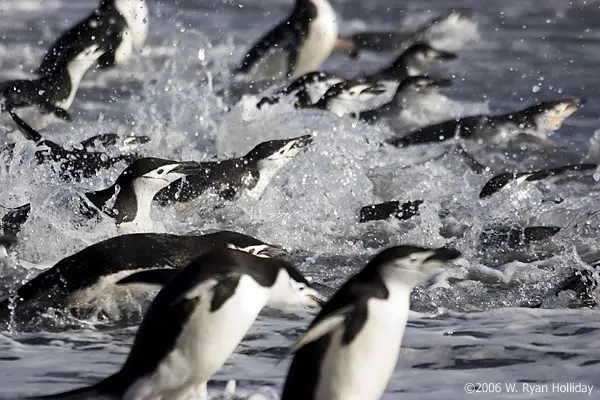
This article will guide you to learn some of the most amazing chinstrap penguin facts for kids. The Chinstrap Penguin belongs to the family of Pygoscelis antarcticus and is generally found in Antarctica and sub-Antarctic region. A black lineage crossing its neck makes these penguins stand out among other species. Because of this physical feature, they can be easily identifiable. Ringed Penguins and Bearded Penguins are the other names of these penguins.
The weight of these species is around 6 kg (13.2 lbs).
Females are slightly shorter and lighter in comparison to the males. During the breeding cycle, the weight of the females is normally lower down to 3 kg (6.6 lbs).
The flippers’ undersides are white, together with a black bill.
They can swim up to 80 km (50 miles) each day.
Unlike other species, chinstrap penguins are believed to be the aggressive birds.
What Do Chinstrap Penguin Eat
The study of chinstrap penguin facts shows that these species predominantly feed on small fish, krill, shrimp, and crustaceans. They are also know to eat crabs and meat.
Where Do Chinstrap Penguins Live
These types of penguins exist in South Georgia, Bouvet Island, barren Islands, Antarctic Peninsula, Balleny, and South Shetland. These birds have an average lifespan of 15 – 20 years. These penguins build their nests on a hard snow-free ground, rocky slopes, headlands, foreshores. The nests have a diameter of 15 inches. Leopard seal is one of the notable predators of these birds. Some birds such as Brown Skua are known to snatch eggs of these penguins.
Chinstrap Penguin
Chinstrap Penguin Facts about its Reproduction
These types of penguins require a dry land to build their nests.
The females normally lay 2 eggs.
Both parents are responsible for incubating (keeping warm) eggs after an interval of 5 – 6 days.
The young penguins fledge out after 32 – 38 days. However, they remain with their parents for 22 – 32 days.
The hatching period lasts for 2 – 3 weeks.
These species are normally found in large colonies comprising more than 12 million birds.
There are about 6 – 7 million breeding pairs of chinstrap penguins.
Chinstrap Penguin Facts – Chinstrap Penguin Fighting Video
Are you curious enough to know what do emperor penguins eat? Well, this article covers all what you want to know about this giant penguin. Emperor penguins are by far the largest living species, belong to the family of Aptenodytes forsteri these birds inhabits in Antarctica.
What do Emperor Penguins Eat
These types of penguins predominantly feed on fish, krill, cephalopods, squid, Nototheniidae, Glacial Squid, Antarctic Silverfish, Antarctic krill, hooked squid, Kondakovia longimana, and crustaceans. Amongst all these nutrients, fish is the supreme source of feeding. These penguins hunt their prey in an open air. These birds have unique hunting characteristics in that they dive down 50 m deep into the water and then swims up to catch fish.
These penguins can breed after 3 years of age. The breeding season usually starts in March and April. They travel great distances to colonial nesting; walking 50 – 120 km on the pack ice. However, successful attempts have been made to artificially breed emperor penguins. It is the only penguin species that is known to travel during an intense cold of Antarctic winter. Thousands of penguins are present in the breeding colonies. The average lifespan is about 20 years; however, some are reported to live up to 50 years.
Where do Emperor Penguins Live
Being endemic to the Antarctic, emperor penguins are extensively distributed between 66o – 77o south of latitudes. There are more than 80,000 breeding pairs of emperor penguins. These birds usually inhabits in icebergs and cliffs. With population of over 400,000, these species extensively lives in Coulman Island, Victoria Island, Atka Bay, Queen Maud Land, Taylor Glacier, Halley Bay, Coats Land, Heard Island New Zealand, South Georgia and Antarctic Peninsula. These penguins are sociable birds and they like to be approached and photographed. Hundreds and thousands of explorers come to see these heaviest penguins each year. Now you’re well aware of where do penguins live!
emperor penguins
However, on the negative side, the population of these species is considerably diminishing and is believed to be the endangered species. There are several reasons for this reduction such as habitat destruction and sudden climatic change due to the global warming.
Have you ever wondered what do penguins eat? Not many people are aware of penguins’ feeding; therefore, I’ve decided to give up some of the most erratic facts regarding Penguins’ diet. Penguins are largely dependent on the sea creatures underneath water while swimming. There are several aquatic animals that penguins are very fond of, such as squid, fish, krill, and crustaceans. Amongst these organisms, fish covers more than 80% of penguins’ diet.
These flightless birds usually consume less fish in winter as compared to the summer. Emperor penguins also feed on cephalopods apart from the squid and lantern fish. Because these flightless birds travel too much, they need fat-oriented diet that helps them to gain strength and allow them to live for quite a few days without eating anything. These birds do not eat anything during the breeding season.
What do Penguins Eat
Penguins are flightless birds that belong to the family of Spheniscidae. These birds predominantly feed on aquatic animals. They are endemic to the Southern Hemisphere and commonly subsist near the equator. Since penguins travel too much during breeding season, they need to eat excessively to regain the strength and to survive without food quite a few days. These flightless birds are adaptable to the human presence and they are very fond of approaching humans. One of the reasons might be that these birds do not have any significant predators on land.
Gentoo penguins limit their diet to Antarctic Krill, lantern fish, glacial squid and Silverfish.
While Gentoo penguins feed on squid and lantern fish; little penguins are mainly dependent on squid for their nutrients. Because these little blue penguins do not dive too deep into the water, they tend to survive while eating squid only.
Galapagos and African penguins usually feed on sardines, cuttlefish, cephalopodus, krill, squid, crustaceans, anchovies, and pilchards.
Yellow-eyed penguins mainly focus on small fish for their diet fulfillment. Around 95% of these penguins’ diet is composed of fish.
Crested, rockhopper, and royal penguins primarily feed on krill, squid, octopus, and crustaceans.
King penguins predominantly feed on lantern fish together with squid.
Well, now you can easily assess what do penguins eat!
There are 17 different types of penguins, each of them differing slightly from each other. Here is an overview of about nine different types of penguins. I hope you enjoy it.
Different Types of Penguins
Emperor Penguin
Among all the different types of penguins widely known, emperor penguin is the biggest of all penguin types in the world. The emperor penguins weigh up to almost 85 lbs and measuring 48-inch in height. Besides, such types of penguinsexhibit vibrant spray of yellowish-orange shade at the chest while dark from rear side and have a white frontage.
Emperor penguins
Where do Emperor Penguins Live?
Antarctica (Weddell and Ross Sea) is the only region in this planet where you’ll track down these types of penguins.
Food Intake
Such types of penguins usually munch through the following:
Squids
Fishes
Crustacean
Krill
Dive Range and Time Underwater
These types of penguinshave a capacity to go for a dip underwater at about 1,700 feet beneath the sea water, which is the longest ever achieved among all the different types of penguins. Also, they can stay inside that water for almost 20 min.
Breeding Season & Number of Eggs laid by Emperor Penguin
The breeding season of such types of penguins is usually winter period and the female penguin lays just 1 egg.
Age Limit
They may live for almost 20 years at the most.
Predators of Emperor Penguin
Shark
Whale
Sea lion
African Penguin or Black Footed Penguin or Jackass Penguin
African penguin
These types of penguins usually weigh about 11 lbs and almost 27 inch in height. Due to the peculiar characteristics, African penguin is recognized quite effortlessly among all the different types of penguins since there are some dark marks and patterns at the abdomen while skull and rear sides are murky. One of the great features of such types of penguins is that each strip is fairly dissimilar to the other one.
Where do African Penguins live?
These types of penguins are readily located in the shoreline of South Africa.
Food Intake
Squids
Pilchard
Anchovies
Sardine
Crustacean
Krill
Breeding Season & Number of Eggs
These types of penguins usually breed in the initial half of February in every year while the female lays only 2 sea green eggs.
Age Limit and Population
These types of penguins may have a lifespan of about 10 years and for the last thirty-five years; the population of African penguins has plummeted to a great extent as almost 1.35 million penguins were killed during this era. Besides in 2000, almost 19,000 African penguins breathed their last because of oil leakage.
Swimming Speed
These types of penguins usually rummage around for their diet at a distance of about 96 kilometers and go swimming at a rapid pace of twenty miles per hour.
Predators of African Penguin
Shark
Fur seal
Kelp Gull
Adelie Penguin
Adelie Penguin
These types of penguins are likely to be undersized among the different types of penguins and for that reason they sound to be quite heavy at times however they weigh up to 15 lbs. Moreover, their height is only 30 inches. Despite of this, there are some distinctive characteristics as well like at the extremity of the bill as well as in the region of eyes, white circles are usually apparent. Also, such types of penguins possess a stretchy tail and a red-shaded mouth which is murky at the end.
Where do Adelie Penguins live?
Apart from Antarctica, these types of penguins also live in Ross Island (about five million).
Food Intake
Krill
Silverfish
Crustacean
Squids
Small shrimps
Breeding Season and Dive Range
Such types of penguins usually breed in the first part of January of each year. At times, they go for a dip at about 500 feet underwater looking for their diet.
Predator of Adelie Penguin
Leopard seal
King Penguin
King Penguin
These types of penguins are next to the Emperor penguins, particularly when it comes to the size among all the different types of penguins. They can weigh up to 35 lbs and a height of about 3 feet. The main structure of such types of penguins is largely shadowy while some feeling of blue shade is also there at the rear side. At the rear as well as at the bill of these penguin types, there is gloomy yellow shade, which is also apparent at their frontage too.
Where do King Penguins live?
They can be readily found in:
Antarctica
Prince Edward Islands
Falkland Islands
South Georgia
Australia
New Zealand
Food Intake
Lantern fish
Crustacean
Squids
Krill
Breeding Season, Population & Dive Range
The breeding period for such types of penguins begins from September and ends on November while female penguin lays just 1 egg. The entire population of these types of penguins is nearly 4,500,000 across the globe. They can also go for a dip at almost 700 feetunderwater mainly in the hunt for their food.
Predators of King Penguin
Killer whale
Voracious birds
Leopard seal
Galapagos Penguin
Galapagos Penguin
These types of penguins are fairly undersized with weighing almost 5 lbs and measuring a height of about 20 inches. Having a shadowy skull with a white frame, these penguins also have a white abdomen along with little gloomy marks.
Where do Galapagos Penguins lives?
Such types of penguins are readily found in Galapagos Islands.
Food Intake
Sardine
Krill
Mullet
Crustacean
Fishes
Breeding Season & Number of Eggs
Such types of penguins do not have a fixed breeding period as the other different types of penguins and they court almost 3 times in a year. The female penguin usually lays about 2 eggs.
Predators of Galapagos Penguin
Hawk
Rat
Seal
Shark
Humboldt Penguin
Humboldt Penguin
These types of penguins are more often not more than 13 lbs in weight. There is a murky strip at the chest of these penguins while just single strip displays at their neck too.
Where do Humboldt Penguins live?
Such types of penguins are readily found in Pacific Coast(South America). Besides, some reports regarding their existence in Peru and Chile are also received.
Swimming Speed & Food Intake
These types of penguins can even swim at a fast pace of about 20 miles per hour while the food intake is largely composed of:
Krill
Fishes
Smelt
Anchovies
Herring
Crustaceans
Population, Age Limit & Number of Eggs
The maximum lifespan of these types of penguins is almost 30 years but the real problem is that they are becoming extinct by the passage of time and a very small number of 12,000 of Humboldt penguins are left behind. The female penguin lays about 3 eggs.
Predators of Humboldt Penguin
Voracious birds
Macaroni Penguin
Macaroni Penguins
These types of penguins are easily distinguished among the different types of penguins, primarily due to the attractive shades of feather located at their skull. Being vibrant-shaded, these penguins are yellowish colored along with a shadowy touch. They can weigh up to almost 12 lbs and a height of about 28 inches.
Where do Macaroni Penguins live?
They are readily present in the Antarctica neck of land.
Food Intake
Squids
Tiny fishes
Krill
Number of Eggs, Population & Dive Range
The female penguins usually lay about 2 eggs. The population of these types of penguins is more or less 18,000,000 throughout the world and they can go for a dip at almost 200 feet beneath the sea water.
Predators of Macaroni Penguin
Voracious birds
Killer whale
Leopard seal
Little Blue Penguin or Fairy Penguin
Little Blue Penguins
Being the smallest of all the different types of penguins across the globe, fairy penguinsweigh almost 2 lbs and a height of about 16 inches. The profound blue shade is quite clearly visible at the apex as well as on the rear side of these species while the frontage is absolutely white.
Where do Little Blue Penguins live?
These types of penguins are readily located in:
Australia
Chile
New Zealand
Tasmania (although very few)
Food Intake
Squids
Fish
Krill
Baby octopus
Crustacean
Anchovies
Sea horse
Eggs of a crab
Age Limit, Breeding Season & Number of Eggs
Such types of penguins can live up to almost 6.5 years typically. The breeding period of these types of penguins usually begins in the month of June in every year and the female penguin lays about 2 eggs only.
Predators of Little Blue Penguin
Snake
Shark
Seal
Lizard
Fishing net
Sea gull
Killer whale
Sea eagle
Sea lion
Dog
Rats
Rockhopper Penguin or Crested Penguin
Rockhopper Penguins
Being extremely attractive shaded feathers, you may easily locate these types of penguins from faraway. The weight of these penguins is almost 5 lbs while their height is almost 21 inches.
Where do Rockhopper Penguins live?
These types of penguins are readily located in Antarctica.
Food Intake
Squids
Little fishes
Krill
Non verbal Signals
Wobble the head
Bending over
Maneuvering the flippers
Preening
Breeding Season & Number of Eggs
The breeding period of these types of penguins mainly begins in summer and the female lays merely 2 eggs.
Population & Age Limit
The population of these types of penguins is more or less 3,000,000 around the globe and they can live up to 10 years.
Where do penguins live is quite frequently asked question but still majority of the people are unaware about where do penguins live in the wild? Well, the penguins are spread out all over the world. However when it comes to the saturation of penguins in any single region, then certainly the southern hemisphere is the only place where every type of penguin is readily available. Many people believe that penguins are more prone to freezing temperatures which is mainly depicted in the movies too. Nevertheless, in addition to the chilly climate of Antarctica, penguins are also inhabited in the pleasant temperatures of Australia as well as South Africa.
Where do penguins live
Where Do Penguins Live
There are 17 different species of penguins sprawled all over the world out of which just 4 species reside on the chilly shoreline of Antarctica (Canada). Because penguins are fond of chilly sea water and also the fact that their entire existence wholly depends upon the deep-sea waters, so they usually live on the shorelines of Antarctica, Australia and South America. Now, you might wonder, where do penguins live on the northern hemisphere? The answer is that absolutely no penguin resides on the northern hemisphere of the world.
Actually, where do penguins live is a serious issue at least for the penguins themselves as they do not want to get eaten away by ground predators. Because of the fact that penguins cannot fly and require those land places where they should avoid land enemies so they seek to go alongside the seashore for their existence. Moreover, penguins have the special ability to swim in the deep waters and they compensate their lack of flying ability with swimming. You’ll be baffled to know that penguins have the ability to swim for about 100 km without a single interval. That is why penguins like to live near the seashore. Generally, the nature has kept the inner body of penguins warm by enveloping it through dense layers of feathers and that’s why they like colder climates.
Names of Countries where penguins live
South Australia
South Africa
South America
New Zealand
Islands and other Regions where penguins are found
A pigeon behind the window, seagull on the shore, gorgeous crow in the park, nightingale song in crisp morning. These amazing birds are constantly influencing our lives. There are over 10,000 bird species worldwide. They possess the superpower we all wish we could have – the ability of flying. People were always interested in birds and wrote papers for sale, encyclopedias and researches on them. We read a lot of these works and want to present 18 facts about birds for you.
1. Flamingos can only eat when their heads are upside down.
2. Birds were originally descended from reptiles
Archaeopteryx, the oldest known bird, lived around 147 million years ago. This bird was very different from today’s birds because it had a long bony tail and teeth.
3. The UK’s most beloved wild bird, the robin, was voted.
4. Ostrich is the largest living bird and can grow up to 2.7m in height with a wingspan up to 2m. This is quite impressive considering it can’t fly. The Ostrich also lays the most large bird eggs at 1.5 kilograms, which is no surprise.
5. Hummingbirds are the smallest living birds in the world. The Bee Hummingbird is the smallest, measuring just 5.5 cm long and weighing only 1.9 grams. It also lays the most tiny eggs, which are about the size of a pea.
6. A chicken with red ears will produce brown eggs. A chicken with white ears will produce white eggs.
7. Beats per minute
A bird’s heart beats up to 400 times per minute when it is resting, and up to 1000 per minute when it is flying.
8. Hooded Pitohui, Papua (New Guinea), is the only known poisonous bird. Its skin and feathers are contaminated with the poison.
9. The radios of world wars were broadcast by pigeons
The man-made communication systems were unreliable and simple, so it was up to the humble pigeons to carry thousands of messages to the front lines. There were more than 300,000 pigeons used in both World Wars. 32 were awarded The Dickin Medal – an animal world’s Victoria Cross.
10. Penguins can leap as high as 6 feet.
11. The Peregrine Falcon is the fastest bird on Earth. It can reach a maximum recorded airspeed of 389 km/h (242 miles) when it dives for food. Common Swift is the fastest bird in level flight with a speed of 169 km/h (105 MPH).
12. Flying while asleep
The albatross can even sleep while it flys. The albatross apparently doeszes when it cruises at 25 mph.
13. The African Gray Parrot is the most vocal bird in the world. A single parrot can speak over 800 words. The majority of parrot species can only learn 50 words.
14. A Madagascar Pochard duck is the rarest bird in all of the world. Only 25 remain wild. The domestic chicken is the most common.
15. Owls can’t move their eyes
Their eyeballs are tubular and they can rotate their heads 270 degrees, which is more than any other animal. The Owl can achieve 360 degree vision by rotating its head 270deg.
16. Puffins can fly underwater.
17. Hammer time
A woodpecker can pick twenty times per second.
18. Quack quack!
The quack of a duck doesn’t echo anywhere and nobody knows why.
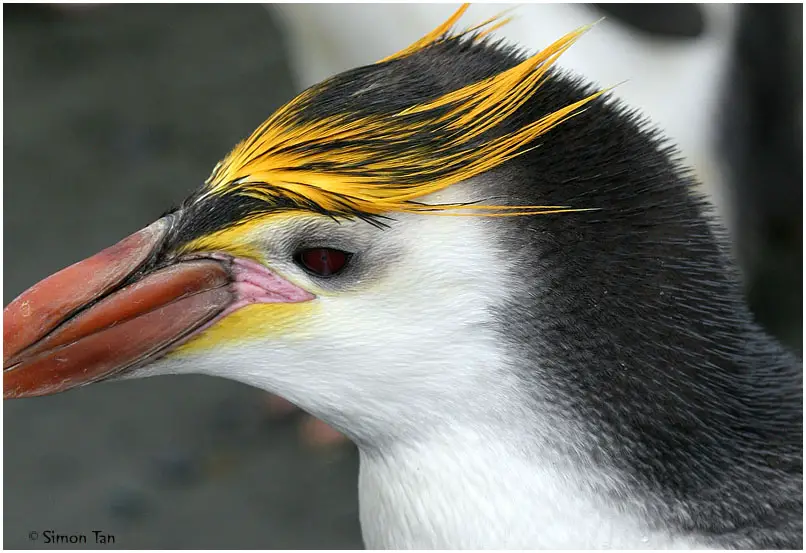
This article lays out some of the essential and uncommon royal penguin facts The Royal Penguin belongs to the family of Spheniscidae and is generally found in the sub-Antarctic Islands including Macquarie Islands. These penguins look very much similar to that of Macaroni Penguins in that both these species have got a yellow crest that runs backwards from the forehead. These types of penguins are considered to be threatened. Some conservationists maintain that royal penguins ought to be the subspecies of Macaroni Penguins; however, the debate is still in progress and the scientists have not been agreed on either of the opinions.
These penguins are not regarded as threatened species even though excessive hunting took place at the end of 19th century as well as at the beginning of the 20th century when many hunting licenses were issued. Because of this, around 150,000 penguins were put to death each year and that includes King and Royal penguins.
Royal Penguin Facts
These species are 65 – 76 cm (26 – 30 inches) long.
Royal penguin weighs around 3 – 8 kg (6.6 – 18 lb).
The females are slightly shorter as compared to males.
They usually build nests on simple grounds where the vegetation is abundant so as to ensure the safety of their nests.
At night, these penguins do not dive too deep into the water for hunting.
They return from sea to their colonies after a 6 month time period.
Like other species, royal penguins are also highly sociable.
Royal Penguin
Royal Penguin Reproduction Facts
The breeding period lasts from September to October.
The females lay 2 eggs and these eggs are incubated for 35 days.
The chicks fledge out after 50 – 60 days.
Males and females incubate eggs after an interval of 10 – 12 days.
They are the strong migratory birds.
What Do Royal Penguins Eat?
Royal Penguin facts about its diet show that these birds primarily feed on fish, krill, crustaceans and squid. While females usually go out in search of food; males are responsible for looking after the chicks. This period is about 15 – 20 days. After two months, these juveniles will no longer rely on their parents for food.
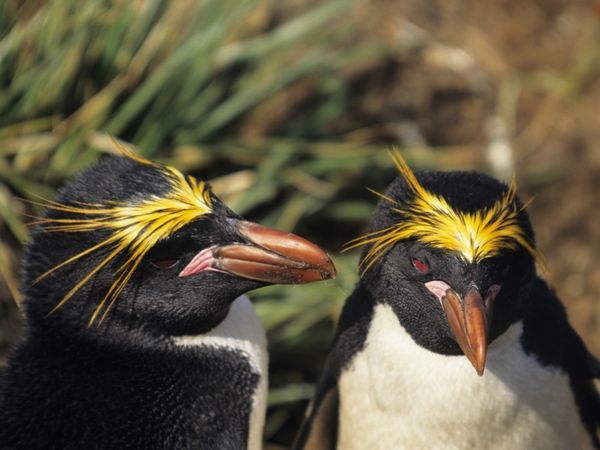
This article is about the most interesting macaroni penguin facts that are not widespread. The Macaroni Penguin (Eudyptes chrysolophus) belongs to the family of Spheniscidae and is a close relative of Royal Penguin. These types of penguins can be easily distinguished through their unique appearance. Unlike any other species, macaroni penguins have a yellow crest that appears on their head. These birds are primarily found in the Subantarctic and Antarctic Peninsula. Macaroni penguin facts show that these birds frequently travel more than 10,000 km (6,200 miles) while swimming in the Indian Ocean. The total population of these birds counts to 18 million around the world.
Macaroni Penguin Facts
The weight of the macaroni penguins is around 5.5 kg (12 lb).
These species are 70 cm (28 inches) long.
The females are slightly shorter (with a shorter bill) as compared to males. However, the plumages are almost the same.
The average weight of males after incubating is about 3.3 kg (7 lb); before moulting it goes to 6.4 kg (14 lb), whereas after moulting the weight is 3.7 kg (8 lb).
The average weight of females is about 3.2 kg (7 lb).
The legs and feet are pinkish, and an orange bill coupled with a yellow forehead crest makes them really unique among other penguin species.
The females have shorter bill with a length of 5.4 cm (2.1 inches) as against males bill which is 6.1 cm (2.4 inches) long.
This yellow crest begins to appear when the penguins reach at 3 years.
Macaroni penguins produce vocals similar to that of the crested penguins and since they are often present in large numbers, the place is too much noisy.
These penguins are highly sociable just like other penguins.
Macaroni Penguin Habitat Facts
Macaroni Penguin facts about its habitat show that these birds are by far the most abundant penguin species worldwide in that there are almost 12 million breeding pairs living today. They are extensively found in South America, Falkland Islands, South Georgia, Kerguelen Islands, Chile, Crozet Islands, Bouvet Islands, Australia, New Zealand, Prince Edward, Orkney Islands, Shetlands, Marion Islands, and Brazil.
In South Georgia, Macaroni penguins hunt at a distance of 50 km (31 miles) away from the colonies. The distance in Marion Islands is 59 – 303 km (37 – 188 miles). These penguins usually dive 100 metres (330 feet) deep into the water for hunting purposes. They continue to be submerged for about 2 minutes. In a single dive, they are known to catch 5 – 10 amphipods.
What Do Macaroni Penguins Eat?
These kinds of penguins predominantly feed on krill, cephalopods, small fish, and various crustaceans. They can form one of the largest breeding colonies comprising more than 100,000 individuals. These penguin species generally scatter around the ocean for about 6 months after the summer is over. They also eat fish, Antarctic krill, and squid, marbled rockcod, painted notie, lanternfish, exoskeletons of crustaceans. These birds swallow small stones just to ensure the proper digestion process.
Macaroni Penguins Threats
Macaroni Penguin Facts about its predators illustrate that few predators are responsible for the macaroni penguin’s death are killer whales, Fur Seal, leopard seal and other aquatic mammals. The macaroni penguins eggs are taken by Sheathbill, Kelp Gull, Giant Petrels and Skua.
Facts about Macaroni Penguins Breeding
The females are capable to breed after 5 years while males usually begin after 6 years.
The breeding period ranges from October to November.
The females lay 2 eggs in the breeding season. The weight of the first egg is about 90 – 94 g (3.2 – 3.3 oz) and the second egg weighs around 145 – 155 grams (5.1 – 5.5 oz).
Both parents contribute toward incubating eggs after an interval of 10 – 12 days. During the incubation, females do not eat anything for about 42 days.
For about 23 – 25 days, the chicks remain with their parents in the nest. They begin to travel toward sea after 60 – 70 days.
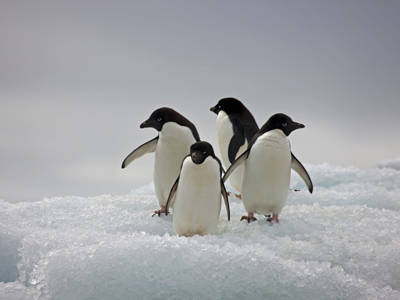
Read on this article and get to know the most amazing adelie penguin facts for kids. The Adelie Penguin belongs to the family of Spheniscidae and this medium sized penguin is generally found in the Antarctic Coast. Adelie penguins are a member genus of Pygoscelis. You may find adelie penguin pictures elsewhere but you may not find these essential facts about this Antarctic Bird.
While adelie penguins are aggressive towards other penguin species, they are also highly social and are known to forage in nesting groups. These birds tend to steal stones from their neighbors for giving protection to their eggs. Some of the most common adelie penguin predators are skua and leopard seals.
Adelie Penguin Facts For Kids
These types of penguins are 46 – 75 cm (18 – 30 inches) long.
Adelie penguins weigh around 3.6 – 6 kg (7.9 – 13 lb).
They have appearance similar to that of tuxedo.
These species are capable to swim at a speed of 45 miles per house (72 km/h).
These birds are highly extrovert and they like to be approached by humans; however, these birds never tolerate other penguins to cross their territories.
Adelie penguins are also known to like children and adults.
They can dive 175 m deep into the water for hunting aquatic animals.
These species usually feel awkward while walking on land and they travel at a speed of 2.5 km/h.
Adelie Penguin Habitat Facts
These species are mostly found in the Ross Island. An estimate tells us that there are more than 5 million Adelie penguins exist in Ross Island.
They can sum up to 38 colonies.
They usually breed around the Antarctic Continent in October to February.
What Do Adelie Penguins Eat
Adelie penguin facts about its diet illustrate that these types of birds predominantly feed on ice krill, amphipods, glacial squid, cephalopods, silverfish, and Antarctic krill.
Adelie Penguin
Adelie Penguin Facts about its Reproduction
The breeding season of these species begin in October and ends on November.
They build their nests by piling stones altogether.
In a single year, these penguins travel almost 13,000 km (8,100 miles) since they are strong migratory birds.
The females lay 2 eggs.
These eggs are incubated by males and females for about 32 – 34 days.
The responsibilities are shifted after an interval of 10 – 12 days.
The young adelie penguins remain with their parents for about 22 days.
They begin to travel toward sea after 50 – 60 days.
These birds generally form large colonies comprising almost 200,000 adelie penguins.
Rocky coasts are the ideal places where these species usually build their nests.
The clutch size consists of 2 eggs.
Adelie Penguins Enjoying Water
Threats to Adelie Penguins
Facts about the adelie penguin adaptations lead us to believe that these birds are highly adaptable. However, apart from the predators like sea lions and leopard seals, rapid climatic change throughout the globe is one of the noteworthy threats to these beautiful birds. Fish covers most of the adelie penguins’ diet but because of the excessive hunting of fish, these birds might be at stake. Until and unless some serious efforts are not taken in this direction these kinds of penguins continue to be at the verge of extinction and soon be declared as adelie penguin endangered.
This article clarifies some of the imperative yellow eyed penguin facts. Yellow eyed penguin belongs to the family of Megadyptes antipodes and is endemic to New Zealand. These types of penguins are the close relatives of Little Penguins.
Yellow Eyed Penguin Facts
These large penguins are 65 – 79 cm (23 – 31 inches) long.
Yellow eyed penguins weigh around 7 – 8 kg (15.5 – 18 lbs), with the minimum weight measuring 5 – 6 kg (11 – 13.2 lbs).
The females are slightly shorter as compared to males.
The lifespan of these birds is about 20 years.
Facts about Yellow Eyed Penguins Diet & Habitat
These birds are primarily found in the coastal shores near water, bays, and wetlands. These species exist all throughout Auckland, South Island, Campbell Island, and Stewart Island. They are affirmed as endangered species. The total population of yellow eyed penguins is no more than 4000 – 6000 in total.(1)
These kinds of penguins hunt 10 – 12 km away from the coastal waters. They are capable to dive 34 m (112 feet) deep into the water. When it comes to the hunting underwater, yellow eyed penguins can go even 20 – 60 m (66 – 196 feet) deep into the water. More than 90% of the yellow eyed penguins diet is composed fish including blue cod, cephalopods, squid, red cod, opalfish, and Blueback Sprat.
yellow eyed penguin
Yellow Eyed Penguin Facts about its Reproduction
These penguins breed all throughout New Zealand. Yellow eyed penguins generally form large colonies during which they build their nests.
The breeding period ranges from August to September.
Females lay 2 – 3 eggs in this period.
The incubation (keeping warm) process lasts for 39 – 51 days.
Both parents contribute toward incubation.
The lifespan of yellow eyed penguins is 24 years
The chicks are properly looked after for at least 6 months.
These juveniles weigh around 5 – 6 kg. They begin to breed after 3 years of age.
Facts about birds for kids are quite interesting to read in particular for fervent children who usually have a keen desire for knowing about amazing facts about birds. Birds are the magnificent creation of nature and it has bestowed upon them some significant and eye catching abilities and features. Generally, birds possess beautiful plumage and unlike mammals, they also lay eggs and are warm blooded. When it comes to different bird species, you’ll find out just about 10,000 different types of birds across the globe. Not all of them can fly and birds that cannot fly are known as flightless birds like penguins and ostriches.
According to experts, the evolution of birds stem from the therpod (beast footed) dinosaurs.
With the help of vacant skeleton, they are able to soar into the air because the weight of plumage is more than its bones.
They do not munch their food since birds have no teeth.
When birds fly in the air by making ‘V’ shape, it allows them to squirrel away their vigor.
More than 70% of all the birds living in their natural habitat pass away under the age of 6 months.
Brown pelicans flying
Interesting And Most Amazing Facts About Birds
Flightless birds
The biggest known flightless bird is ostrich and is also the quickest bird that can sprint at a rate of 60 miles per hour. Not only this, ostrich has to its credit the largest egg too.
The magnitude of ostrich brain is less than the size of its eye.
Kiwi bird is by far one of the rare birds that are in danger of extinction. Unlike other birds, they are only found in New Zealand.
Kiwi bird is the only bird that has no wings.
Hummingbird
One of the amazing facts about birds is that hummingbird is capable to soar toward the back.
Bee hummingbird is certainly the tiniest bird across the globe with the entire span of almost 7 centimeters.
In a minute, the heart rate of hummingbird may extend to about 1,260 times.
Almost 80% of the entire species of birds reside in the same place where they are while the remaining birds are called migrating birds and voyage hundreds of thousands of kilometers from their home. Thus, it is one of the useful facts about birds for kids.
Having more than 70% of water inside the body, fowl is definitely a unique bird in its features.
Parrot
Macaw is the biggest parrot specie with the lifespan of about 70 years. However, the kinds of parrots are roundabout 328 in total.
Chocolate may be mouth-watering foodstuff for kids, but they are venomous for parrots. Hence, one of the most important facts about birds for kids.
Parrots are widely known for their ability to impersonate human verbal communication. However, grackle is also good in doing so.
Eagle
As compare to the wings of an airliner, eagle has relatively sturdier wings.
Pigeon
Pigeons have the capability to spot Ultraviolet rays.
The experts believe that pigeons are older than humans and they lived prior to the human creation on earth and form one of the notable facts about birds for kids.
Unlike other birds, pigeons make use of their both eyelids in order to bat an eyelid.
Woodpecker
Woodpecker pecks on a tree at the rate of almost 21 times in a second.
Falcon
When it comes to the quickest flying bird, peregrine falcon is by far the speediest bird with a flying velocity of almost 346 kilometers per hour.
Penguin
Penguins are fine swimmers but when it comes to the quickest swimmer, Gentoo Penguin takes the lead.
Venomous Bird
Nestled in New Guinea, Hooded Pitohui is the only bird that has venom in its plumage and body. It is one of the rarely known facts about birds for kids.
Most Ancient Bird
Archeopteryx is the most archaic bird in this planet.
Pelican
Pelicans from Australia possess the most elongated beak in all species of birds.
Hawk
The eyesight of hawks is known the best of all since they can track their victim down right from 1.6 kilometers in the air.
Crow
Crows can impersonate the voices of various animals.
Sooty Tern
Sooty tern is known for their elongated flight and they may soar into the air for about 4 years without taking a rest. Therefore, it is one of the incredible facts about birds for kids.
Many people ask about do birds have ears and if yes, then why can’t we see them. Well, yes of course, they do have ears indeed. If you are unable to see them, it doesn’t mean they do t have ears and cannot listen because if birds do not hear anything then how come you always hear their beautiful voices? Now you may be wondering about why I mentioned here the chirping of birds! Well, it’s not a big deal since if you cannot hear, you cannot speak. This post is going to tell you not only that birds do have ears but also where are birds ear.
Do Birds Have Ears – Why Can’t You See Them
Bird eye configuration
Just like humans, birds also have ears that are apparently akin to our ears but since they are enveloped with feathers known as auriculars, so they are barely visible. The birds’ ears are quite evident but if and only if you detach heavy feathers on top of them. It is but natural that one cannot have a glance on to it due to special covering. This is primarily due to the reason that as they soar into the air, a strong gust of wind blows from all over its body and it becomes almost out of the question to pay attention to anything unless their ears are wrapped up. You may also experience the same while puff of air navigates your ears and you can hear nothing but current of air. Likewise, allowing their ears to get covered means they get rid of the nuisance caused by air currents while at the same time, enabling them to perceive sound of anything else.
It is now obvious that birds have ears but since they are heavily covered with feathers, therefore invisible. Now we’ve got the complete explanation about do birds have ears? Few flightless birds including penguins also have dense casing over their ear fissures and it makes them to go for a dip underneath the water without having any stress on their ears. Naturally designed for hearing, there are several kinds of birds that often track down their prey merely on the basis of extraordinary hearing senses like barn owls. Located on both sides of their skull, the size of ears is almost similar to the eyes and the underlying principle behind their fabrication is just like humans. However, as opposed to the flutters of humans, birds’ ears solely comprise of a single hole.