Search results for: “penguins”

  • Can Flamingos Fly – Do Flamingos Fly

    Can Flamingos Fly – Do Flamingos Fly

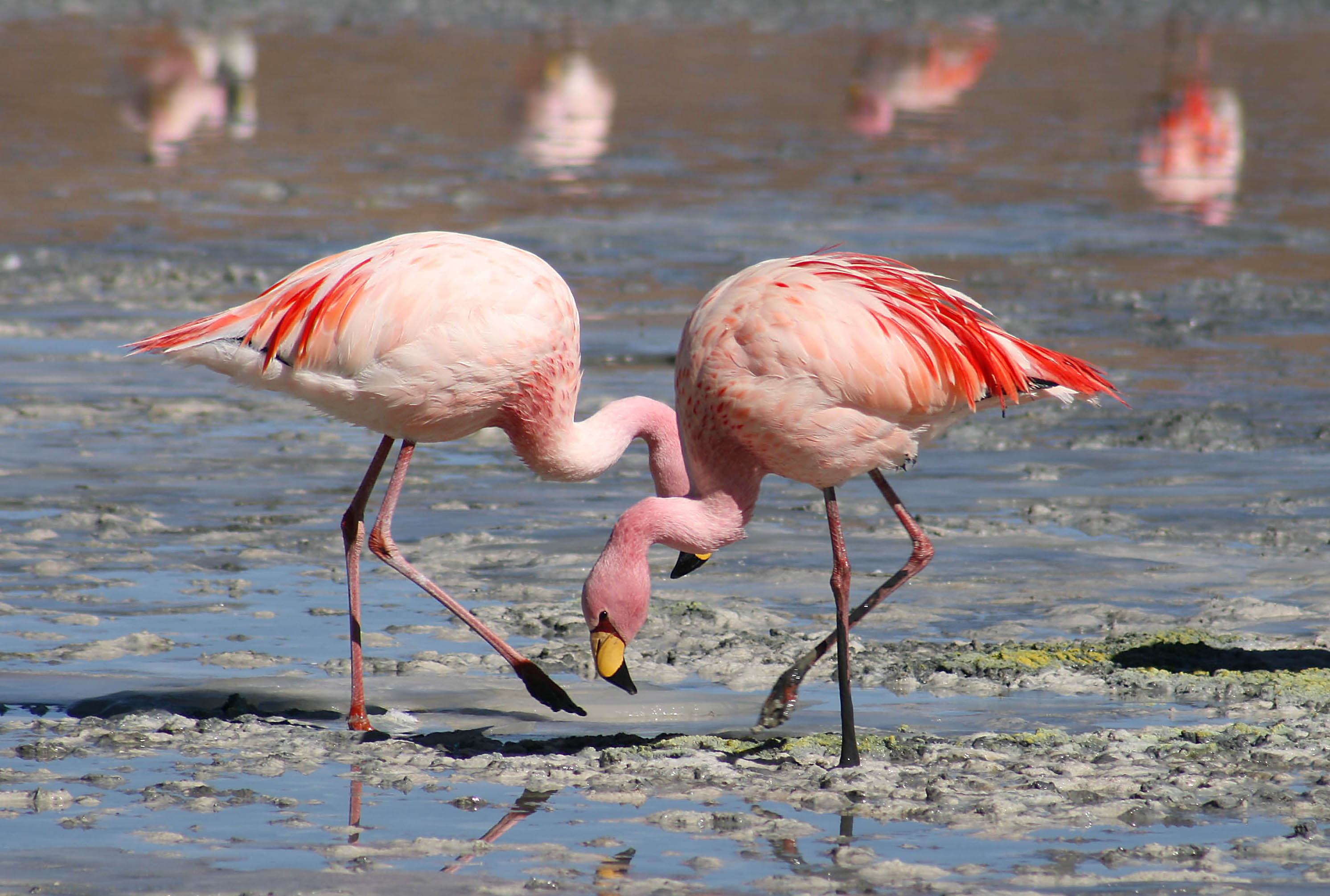
    Like in the case of penguins, many people are unsure about can flamingos fly in the real world and if yes, then how long do flamingos fly in the air? These are some of the unsettling questions that call for comprehensive answers. Having unique physical appearance as well as feeding techniques, flamingos stand out as the special gift of nature. Well, most of use marvel at the beauty of these birds but very few know exactly about its particular characteristics.

    Well, the answer is yes certainly! Flamingos can fly and can speed up to a maximum of 40 miles per hour in the air. However, unlike other birds, they cannot take off hurriedly and demands a lot of effort from them to fly due to which they do not fly too often. In the late hours of darkness, they soar more than 550 kilometers while sailing from one locale to another. Furthermore, they are also fully aware about the potential danger of high flying predators like eagles and therefore, flamingos seek to take wing at higher elevations. They usually fly in great formations and by wriggling their wings relentlessly; these birds are able to sustain their flight.

    Can Flamingos Fly

    Flamingos Flying – The Initial Flight

    The preflight procedure of flamingos bears great resemblance to the airplanes. Unlike helicopters, they need to gather some speed before taking a flight and so they strides out for quite a while followed by the flutter of wings and ultimately hauling themselves up in the air. Besides, in order to generate maximum speed in minimum time span, they tend to bend their skull as well as stretchy neck to the front whereas the feet are allowed to drop back.

    Do Flamingos Fly

    Flying Flamingos – The landing mechanism

    Again while going ashore, they are not unlike the landing of an airliner. Like an airplane takes its two helms out just before landing, flamingos also disembark on their feet and are then carried forward by few further strides to slow down its speed.

    More Interesting Information on Flamingos

    Flying Flamingos Videos


  • Types of Eagles – What Do Eagles Eat – Where do Eagles live

    Types of Eagles – What Do Eagles Eat – Where do Eagles live

    Not many of you would be aware of these types of eagles . This article lays down some of the important facts about different eagle species. Eagles are one of the largest birds of prey that belong to the family of Accipitridae. Most of these species are endemic to Eurasia and Africa; out of which bald eagles and golden eagles are the only species that subsides in the North America and Canada only. Eagles generally build their nests on lofty trees in tropical and subtropical forests where water is abundant. Like other raptors, females are slightly larger as compared to males. These are the aggressive birds and do not allow anyone to approach their nests. While they migrate toward north in spring season; these birds of prey travel to south in fall in quest for food. They have long eye brows that provides a shade against sunlight. Eagles rarely miss any prey for the reason that they have sharp eyesight and powerful talons that makes the kill almost unmoved.

    Types of Eagles

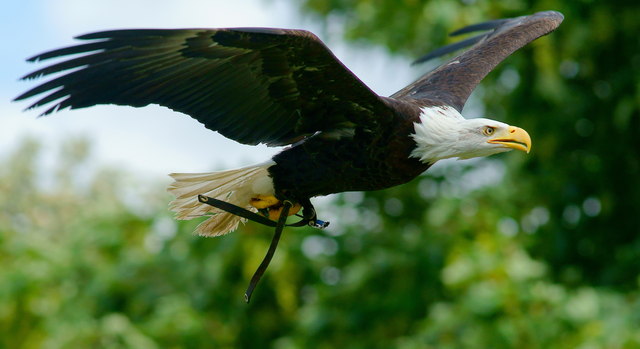
    Bald Eagle

    bald eagle - Types of eagles
    bald eagle

    The bald eagle is one of those types of eagles that are extensively found in North America. These eagles belong to the family of Haliaeetus leucocephalus. Bald eagle is also the national bird of United States. It is mostly found near large quantity of water. This eagle has a white head followed by a brown feathered body.

    What do Bald Eagles Eat?

    1. These types of eagles are opportunistic birds of prey.
    2. The prime bald eagle diet consists of fish, trout, and salmon.
    3. The regular bald eagle diet comprises of carrion, whales, fish, squid, ungulates.
    4. These vigilant birds also prey on mammals including rats, rabbits, raccoons, beavers, muskrats, deer, and hares.
    5. As far as avian prey is concerned, bald eagles mostly eat gulls, ducks, alcids, coots, grebes, geese.
    6. Large preys include swans, ungulates, reptiles, crustaceans, crabs and amphibians.

    Where do Bald Eagles Live?

    These are considered to be an endangered species and are commonly found in North America.

    They usually build their nests on lofty trees near water.

    Forests, lakes, swamps, and tropical rainforests are some of the common places where bald eagles normally live.

    Average Lifespan in the Wild:

    The average lifespan of bald eagle is up to 28 years.

    More Facts about Bald Eagle

    golden eagle - types of eagles
    golden eagle

    Golden Eagle

    The golden eagles are the types of eagles that belong to the family of Accipitridae (Aquila Chrysaetos). These birds of prey are normally found in the Northern Hemisphere.

    What do Golden Eagles Eat?

    The primary diet consists of rabbits, marmots, squirrels, and small insects.

    Large sized mammals include foxes, deer, goats, ibex, roe deer.

    Where do Golden Eagles Live

    Golden eagle habitat is commonly found near abundance of water. These birds of prey mostly live North America and Africa.

    Apart from North America, these birds also exist in Eurasia, Siberia, Eastern Siberia, Kazakistan, China, Himalayas (North of Pakistan), Bhutan, Turkey, Japan, and Korea.

    Average life span in the wild:

    The average lifespan of golden eagles is around 30 years.


    Harpy EagleHarpy Eagles

    Harpy eagle is another bird of prey and is also known as American Harpy Eagle. It is also considered to be the most powerful raptor in America. It’s population has been negatively affected due to the deterioration of its habitats.

    What do Harpy Eagles Eat?

    Harpy eagle’s diet comprise of mammals such as monkeys, sloths, anteaters, opossums, coatis, and porcupines.

    Where do Harpy Eagles Live?

    Like bald eagles, harpy eagles are also found in North America, Central America and goes to Argentine.

    More Interesting Facts about harpy eagle

    Crested Serpent Eagles

    Crested serpent eagles are not the largest species, rather these birds of prey are of medium size and are extensively found in Asia. These eagles belong to the subfamily of Circaetinae. They have loud vocalization and have powerful talons that penetrate deep into the kill.

    Where do Crested Serpent Eagles Live?

    1. These birds are commonly found across tropical Asia, Borneo, Peninsula, Sumatra, Taiwan, Batu, Bali, and Palawan.
    2. These birds of prey also exist in islands such as Andamans, Ryuku, Simeulue, Natuna, and Central Nicobars.
    3. In Asia, Crested Serpent eagles exist in India, Sri Lanka, Nepal, and China.

    What do Crested Serpent Eagles Eat?

    Unlike other species, these types of eagles usually make most of their diet by eating reptiles such as snakes and lizards.

    By J.M.Garg (Own work) [GFDL (http://www.gnu.org/copyleft/fdl.html) or CC-BY-SA-3.0-2.5-2.0-1.0 (http://creativecommons.org/licenses/by-sa/3.0)], via Wikimedia Commons
    By J.M.Garg (Own work) [GFDL (http://www.gnu.org/copyleft/fdl.html) or CC-BY-SA-3.0-2.5-2.0-1.0 (http://creativecommons.org/licenses/by-sa/3.0)], via Wikimedia Commons

    Madagascar Serpent Eagle

    The Madagascar serpent eagle is a bird of prey that belongs to the family of Eutriorchis astur. This specie is endemic to Madascar. This is medium size specie with a long tail.

    Where do Madagascar Eagles Live?

    1. These types of eagles are mostly found in the lowlands, tropical forests, and subtropical forests.
    2. They also exist in the Northeastern range of Madagascar.

    What do Madagascar Eagles Eat?

    These eagles eat lizards, snakes, and frogs to fulfill their regular diet.

    Booted Eagles

    Like serpent eagles, booted eagles are also medium sized birds of prey. These types of eagles belong to the family of Aquila pennata. They are the migratory birds and feed on different places.

    booted eagle
    booted eagle

    Where do Booted Eagles Live?

    These types of eagles live in North America, Europe, and all throughout Asia.

    What do Booted Eagles Eat?

    The prime eagle’s diet comprise of mammals, raptors, several kind of birds, and insects.

    READ: Top 5 Cockatiel Cages

    African Fish Eagle

    African fish eagles are by far one of the largest eagle species that belongs to the family of Haliaeetus vocifer. The physical appearance of African eagles resembles very much to that of bald eagles.

    african fish eagle
    african fish eagle

    Where do African Fish Eagles Live?

    1. Like bald eagles, these species also build their habitats near water-abundance reservoirs such as lakes, swamps, Tropical rainforests, fynbos, even deserts, grasslands, marshes, and rivers.
    2. They are commonly found in the Saharan Africa, Sahara desert, Orange River, Namibia, Okavango Delta, Tanzania, Malawi, Lake Victoria, and South Africa.

    What do African Fish Eagles Eat?

    1. The prime diet of these types of eagles consists of fish.
    2. These eagles are known to eat ducks, waterfowls, turtles, terrapins, small fish, frogs, greater and lesser flamingos, sloths, monkeys, hyraxes, and carrion.

    Pallas’s Fish Eagle

    Pallas’s Fish Eagle is a large size brown eagle and belongs to the family of Haliaeetus leucoryphus. The breeding place of these eagles lies in central Asia. Naturalists maintain that these eagles are not the migratory birds.

    Where do Pallas’s Fish Eagle Live

    These species normally exists in the Central Asia, Himalayas, Caspian Sea, Bangladesh, Persian Gulf, Mongolia and India.

    What do Pallas’s Fish Eagles Eat?

    One of the chief diets of these eagles is fish including salmon and trout.

    Pallas's Fish Eagle
    Source: http://www.flickr.com/photos/lipkee/2478487006/

    Crested Eagle

    The crested eagles belong to the family of Morphnus guianensis. Females are slightly greater in size in comparison to the males.

    Crested Eagle
    Crested Eagle

    Where do Crested Eagles Live

    These types of eagles have a wide range in that they are found in Panama, Costa Rica, Columbia, Guatemala, Venezuela, Suriname, French Guiana, Belize, Honduras, Guyana, Nicaragua, Argentine, Peru, Paraguay and Brazil.

    What do Crested Eagles Eat?

    1. These eagles prey on small mammals like sloths, monkeys and tamarins.
    2. Research indicated that crested eagles also eat reptiles like snakes.

    long crested eagle
    long crested eagle

    Long-crested Eagle

    These birds of prey belong to the family of Lophaetus occipitalis. As compared to typical eagles, long-crested eagles are smaller in size with a length of only 55 cm.

    Where do Long-crested Eagles Live

    These species are found in the Southern Africa. These birds build their habitat on woodlands and forests.

    What do Long-crested Eagles Eat?

    Due to their relatively smaller size, these birds tend to catch small insects, birds such as ducks, and frogs.

    Black Eagle

    Black_eagleThe black eagle belongs to the family of Ictinaetus malayensis and is also the member of genus ictinaetus. They normally build their habitats in forests and are commonly found in Asia.

    What do Black Eagles Eat?

    These types of eagles usually eat small mammals such as monkeys, sloths, in conjunction with other birds.

    Where do Black Eagles Live?

    One of the common breeding places of black eagle is tropical Asia including Sri Lanka and India.

    Steller’s Sea Eagle

    Stellers_Sea_EagleStellar’s sea eagle is considered to be a large bird of prey; belong to the family of Accipitridae. These types of eagles are mainly found in the Northeastern part of Asia.

    Where do Stellar’s Sea Eagles Live?

    1. Stellar’s sea eagle is found in several Islands such as Shantar islands and Kuril Islands. Apart from islands these birds also live near rivers including Amur River and Sakhalin.
    2. These birds are extensively found in the North America and Taiwan.
    3. These species like to build their nests on a large rocky outcroppings or top of the trees. They build habitats near wetlands.

    What do Stellar’s Sea Eagles Eat?

    1. One of the prime diets of these eagles is fish such as salmon, cod, and trout.
    2. Apart from the fish, these birds of prey rely on ducks, swamps, cranes, gulls, squid, carrion, mammals, crabs, mussels, carrion, swans, herons, and geese, for their feed.

    Philippine Eagle

    These birds of prey are one of the largest eagle species. These birds are also known as Monkey-eating Eagle. Philippine eagle basically exists in Philippine and is also symbolized as the national bird of the country. These eagles belong to the family of Pithecophaga jefferyi.

    philippine eagle - Types of eagles
    philippine eagle

    Where do Philippine Eagles Live?

    Apart from other places, Philippine eagles are customarily found on four main Islands that are classified as:

    Samar Island

    Luzon Island

    Leyte Island

    Mindanao

    What do Philippine Eagles Eat?

    As the other name indicates, these birds of prey are known to prey on monkeys on regular basis.

    Apart from monkeys, these birds rely on flying lizards, flying lemurs, cloud-rats, monitors, owls, hornbills, snakes, and small dogs occasionally.

    Greater Spotted Eagle
    Greater Spotted Eagle

    Greater Spotted Eagle

    Greater spotted eagle is a large bird that belongs to the family of Aquila clanga. These eagles have more characteristics in common to the sea eagles.

    What do Greater Spotted Eagle Eat?

    These birds of prey munch on small mammals including monkeys, sloths, rats, and rabbits.

    Where do Greater Spotted Eagles Live?

    These eagles are found all throughout Asia and northern Europe. They travel to Europe in cold days. They are abundantly found in the Middle East, Bhutan, Siberia and South Asia.

    Lesser Spotted Eagle - Types of Eagles
    Lesser Spotted Eagle

    Lesser Spotted Eagle

    Lesser spotted eagles belong to the family of Aquila pomarina. Like other species, these birds are found near abundant water.

    Where do Lesser Spotted Eagles Live?

    These birds of prey exist in the central Europe and southern part of Turkey.

    What do Lesser Spotted Eagles Eat?

    These birds hunt small mammals along with fish.

    Steppe Eagle
    Steppe Eagle

    Steppe Eagle

    The steppe eagle is a large bird of prey that belongs to the family of Aquila nipalensis. These birds are believed to be half migratory birds.

    Where do Steppe Eagles Live?

    The steppe eagles normally breed on Romania and Mongolia.

    What do Steppe Eagles Eat?

    An essential part of steppe eagle’s diet comprise of carrions, rodents, and small mammals.

    Tawny Eagle
    Tawny Eagle

    Tawny Eagle

    Tawny eagle belongs to the family of Aquila rapax. Previously, naturalists believed that the bird is not a migratory; however, no evidences were provided for this belief.

    Where do Tawny Eagles Live?

    Africa, Asia, and Sahara Desert are the few common places where these birds breed on.

    What do Tawny Eagles Eat?

    These species rely on carrions together with reptiles and small mammals such as rabbits, rats, and monkeys. They can eat birds with the size of guineafowl.

    black chested buzzard eagle
    black chested buzzard eagle

    Picture by http://www.knowsleysafariexperience.co.uk/

    Source: https://www.flickr.com/photos/125432682@N07/14411940686/

    Black-chested Buzzard-Eagle

    Black chested buzzard eagle belongs to the family of Geranoaetus melanoleucus. The other name of this eagle is black buzzard eagle.

    Where do Black-Chested Buzzard Eagles Eat?

    1. These types of eagles commonly feed on mammals like medium sized rabbits, and rats.
    2. The also eat burrowing owl, Penelope guans, squamates, anthropods, and carrion.

    Where do Black-Chested Buzzard Eagles Live?

    1. These birds of prey largely build their nests on lofty trees or rocky cliffs.
    2. These species are commonly found in Brazil, Argentine, Alagoas.

    Crowned Solitary Eagle

    Crowned Solitary EagleThe crowned solitary eagle is a large bird of prey and is considered to be an endangered species. These birds belong to the family of Harpyhaliaetus coronatus.

    Where do Crowned Solitary Eagles Live?

    These birds of prey live in Brazil, Argentine, Bolivia, and Paraguay.

    What do Crowned Solitary Eagles Eat?

    These birds munch on small mammals and other preys like fish, skunks, rodents, snakes, monkeys, weasels, lambs and other reptiles.

    Montane Solitary Eagle

    Montane Solitary Eagle mostly lives in Mexico and Central America. These birds feed on snakes and deer.

    Papuan Eagle

    Papuan Eagle is a large bird of prey that belongs to the family of Harpyopsis novaeguineae. This specie has very strong talons. The females are greater in size as compared to males.

    black-and-chestnut eagle
    black-and-chestnut eagle

    Black-and-chestnut Eagle

    The Black-and-chestnut Eagle belongs to the family of Spizaetus isidori. These birds are also known as Isidor’s Eagle.

    What do Black-and-chestnut Eagles Eat?

    These species normally feed on monkeys, porcupines, coatis, and guans.

    Where do Black-and-chest Eagles Live?

    These birds are generally found on montane forests in Argentine, Bolivia, Peru, Columbia, Venezuela, Santa Marta and Ecuador.

    crested hawk eagle
    crested hawk eagle

    Crested Hawk-Eagle

    Crested Hawk Eagle is a large bird and it belongs to the family of Nisaetus cirrhatus.

    Where do Crested Hawk Eagles Live?

    These species live in India, Philippine, Sri Lanka, Indonesia, and Himalayas.

    What do Crested Hawk Eagles Eat?

    Crested Hawk Eagles normally eat mammals, reptiles, and birds.

    mountain_hawk eagle
    Mountain-Hawk eagle

    Mountain Hawk-Eagle

    These species belong to the family of Nisaetus nipalense. This is a medium sized bird

    Where do Mountain Hawk Eagles Live?

    These birds are found in the Indian Subcontinent, Nepal, India, Thailand, Taiwan, and Japan.

    What do Mountain Hawk Eagles Eat?

    These species normally munch on small mammals, reptiles, and different types of birds.

    Black-and-white Hawk-Eagle

    Spizastur_melanoleucusBlack-and-white Hawk-eagle belongs to the family of the Spizaetus melanoleucus. These types of eagles are extensively distributed all throughout the Southern Mexico.

    Where do Black-and-white Hawk-eagles Live?

    1. These species are found in Mexico, Central America, South America, Caribbean coast, northern Columbia, Venezuela, Nicaragua, Argentine, Santa Cruz, Bolivia, Amazonia, Lorenta Region, Brazil, Paraguay, Guianas, Uruguay, and South to Ecuador.
    2. These birds tend to build their habitats near subtropical forests as well as in savanna.

    What do Black-and-white Hawk-eagles Eat?

    1. These are the carnivorous birds and they feed on small mammals, squamates, toads, tenagers, cotingas, aracaris, and monkeys.
    2. These species build their nests in the month of September especially during a rainy season.
    Ornate Hawk Eagle
    Ornate Hawk Eagle

    Ornate Hawk-Eagle

    These are the birds of prey that belong to the family of Spizaetus ornatus. Ornate Hawk-eagles have different plumages when it comes to adults and chicks. These species are usually exists in the Tropical America.

    Where do Ornate Hawk-Eagles Live?

    1. One of the prime breeding places of these birds is tropical forest that runs through the Southern Mexico and Peninsula.
    2. Apart from the forests, these species live in Trinidad and Tobago, Peru, and Argentine.

    What do Ornate Hawk-Eagles Eat?

    1. Like booted eagles, these species are also the powerful birds and they rely on toucans, parrots, chickens, curassows, wood-quails, pigeons, little blue herons, cotingas, and black vultures.
    2. These birds also feed on mammals and other little animals like squirrels, rats, monkeys, reptiles, agoutis, and procyonids.

    blyths hawk eagle
    blyths hawk eagle

    Blyth’s Hawk-Eagle

    These types of eagles are not the largest of birds. They are only 50 – 55 cm long. Blyth’s Hawk-Eagle is belongs to the family of Nisaetus alboniger.

    Where do Blyth’s Hawk-Eagles Live?

    These birds usually live in Malaysia, Borneo, Singapore, Sumatra. These species build their nests on high elevated trees.

    javan hawk eagle
    javan hawk eagle

    Javan Hawk-Eagle

    Javan Hawk-Eagle is the bird of prey that belongs to the family of Nisaetus bartelsi. These are the medium-sized birds and they tend to feed on small mammals.

    Where do Javan Hawk-Eagles Live?

    These birds are endemic to the tropical forests. These eagles are widely distributed to East java, National Park, Sempu Island and Kebun Binatang.

    Sulawesi Hawk-Eagle
    Sulawesi Hawk-Eagle

    Sulawesi Hawk-Eagle

    These eagles are considered as medium sized species. These species belong to the family of Nisaetus lanceolatus. They are brown feathered birds with a mark on their chests.

    Where do Sulawesi Hawk-Eagles Live?

    They are endemic to Indonesia, Buton, Muna, Sulawesi, and tropical rainforests.

    What do Sulawesi Hawk-Eagles Eat?

    The prime diet consists of snakes, lizards, monkeys, and soths.

    Wallace’s Hawk-Eagle

    Wallace’s Hawk-Eagle is associated with the family of Spizaetus. The length of the Wallace’s Hawk-Eagle measures about 46 cm. These birds are medium sized species.

    Where do Wallace’s Hawk-Eagles Live?

    1. These birds of prey live in Indonesia, Thailand, Myanmar, and Brunei.
    2. They build their habitats in lowlands or subtropical forests.
    Black Hawk-Eagle
    Black Hawk-Eagle

    Black Hawk-Eagle

    Black Hawk Eagles are associated with the family of Spizaetus tyrannus. They are relatively larger sized eagles as compared to the Wallace’s Hawk.

    Where do Black Hawk Eagles Live?

    These species are endemic to South America and they are usually found in Mexico, Peru, Brazil, and Argentine.

    These types of eagles construct their habitats near rivers, in forests, and other water abundant places.

    Facts about Black Hawk Eagles’ Diet

    These birds generally feed on rodents, monkeys, opossums, bats and toucans.

    Crowned Eagle
    Crowned Eagle

    Crowned Eagle

    Crowned Eagles are large birds of prey and is also the member of genus Stephanoaetus.

    Where do Crowned Eagles Live?

    1. Crowned eagles generally live in South Africa, Madagascar, and Sub-Sahara Africa.
    2. Other African places include Zambia, Kenya, and Uganda.
    3. These species build their habitats in woodlands and forests.

    What do Crowned Eagles Eat?

    These birds prey on small mammals, reptiles, birds, lizards, and monkeys.

    Martial Eagle
    Martial Eagle

    Martial Eagle

    Martial Eagles are linked with the family of Polemaetus bellicosus. These are considered to be the large eagles.

    Where do Martial Eagles Live?

    1. Martial eagles breed on Sub-Sahara African.
    2. These birds depend on environment for making their living as a resident. The friendlier the environment is the more chances are there for Martial eagles to live on.
    3. They have large population in places like Zimbabwe, South Africa, Kruger National Park.

    What do Martial Eagles Eat?

    These birds mainly feed on lizards, snakes, baboons, mongooses, African pythons, Geese, Lambs, and mountain goats.

    Haast’s Eagle

    Haast’s Eagle is by far the largest species that had ever existed. In the primitive times, these birds were endemic to New Zealand.

    What do Haast’s Eagle Eat?

    These birds feed on flying mammals including bats as well as other preys such as deer, and cattle.

    Indian Spotted Eagle

    Indian Spotted Eagle is the large bird of prey that belongs to the family of Aquila hastate. These birds are close relatives of sea eagles and fish eagles.

    Where do Indian Spotted Eagles Live?

    These eagles live in Bangladesh, Myanmar, Nepal, Sri Lanka, and India.

    Verreaux's Eagle
    Verreaux’s Eagle

    Verreaux’s Eagle

    These types of birds belong to the family of Aquila verreauxii; these species are also known as Black Eagle. They like to live on the mountainous regions.

    Where do Verreaux’s Eagles Live?

    Western Asia and Western Africa.

    What do Verreaux’s Eagles Eat?

    Guineafowl, carrion, antelope, monkeys, reptiles, and bearded vulture.

    White-tailed Eagle
    White-tailed Eagle

    White-tailed Eagle

    White tailed eagle is also known as sea eagle and is associated with the family of Haliaeetus albicilla.

    Where do White Tailed Eagles Live?

    Northern Europe, Northern Asia, Norway, Siberia, Greenland, and Iceland.

    What do White Tailed Eagles Eat?

    Fish, mammals, carrion, and otters.

    White-bellied Sea Eagle
    White-bellied Sea Eagle

    White-bellied Sea Eagle

    The white-bellied sea eagle belongs to the family of Haliaeetus leucogaster. These species are closely related to the Sanford’s sea eagle.

    Where do White-bellied Eagles Live?

    Southeast Asia, Australia, Sri Lanka, Tasmania, Victoria, South Australia, Mumbai, New Guinea, Hainan, Kangroo Island.

    What do White-bellied Eagles Eat?

    Carrion, little Penguins, Northern Common Cuscus, Shearwaters, swamp harriers, Brahminy Kites, macropods, grebes, maned duck, magpies, coots, and water dragon.

  • Rockhopper Penguin Facts for Kids – Rockhopper Penguin Habitat

    Rockhopper Penguin Facts for Kids – Rockhopper Penguin Habitat

    Rockhopper penguin facts for kids allow you to cram relevant and interesting insights about this beautiful bird. Rockhopper penguin is by far the smallest penguin specie. Eudyptes chrysocome is the scientific name of these birds.

    Rockhopper Penguin Facts for Kids

    1. The weight of the rockhopper penguins is 2.3 kg to 2.7 kg.
    2. The females are slightly smaller in size as compared to males.
    3. These species are 52 cm long.
    4. Rockhoppers are capable to dive 100m deep into the water.
    5. These species are believed to be the most aggressive birds amongst all the penguins.

    Rockhopper Penguin Distribution Facts for Kids

    They are extensively distributed all over the islands including Antarctic Polar Front and Southern part of the Atlantic and Indian Oceans.

    Breeding Facts of Rockhopper Penguin

    1. As far as the breeding facts are concerned, these species have the same biology as that of other royal or Galapagos penguins.
    2. Unlike other penguins, the breeding season of these birds does not last too long.
    3. Females lay 2 eggs out of which second egg usually comes up with a chick.
    4. The males come back to their colonies in the month of October and November while females return afterwards.
    5. After their return to the colonies, they tend to rebuild their nests altogether.
    6. While females incubate (keeping warm) eggs, males usually go out in search of food and return after 1 month period. Females go by these days without food.
    7. The normal time when the chicks fledge comes in January.
    8. The breeding colonies comprise of more than 100,000 nests.
    9. Breeding starts from the day when the female lays 2 eggs in 4 days period.
    10. The incubation period lasts from 32 – 34 days.
    11. The clutch comprise of 2 eggs.
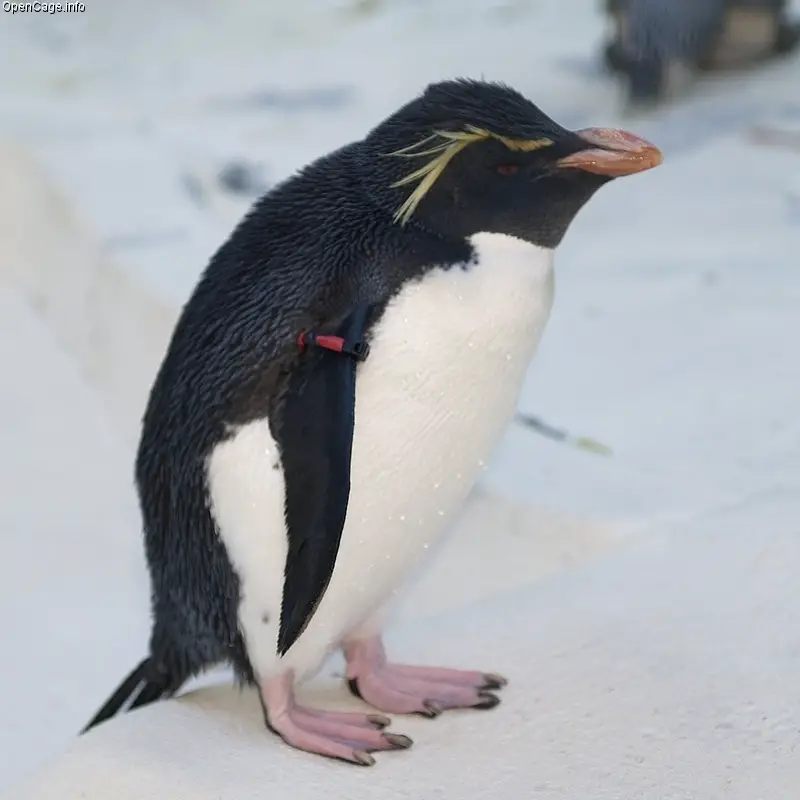
    Two Rockhopper penguins - Rockhopper penguins facts
    Rockhopper penguin

    Conservation Status

    1. On the negative side, the population of rockhopper penguins has been reported to decline more than 90% in different islands such as Falkland, Antipodes and Campbell Islands. One of the possible causes of this decline is the significant increase in the islands’ temperature due to which it becomes difficult for these penguins to hunt out their prey.
    2. Increasing global warming is mainly responsible for the added temperature.
    3. In the Macquarie Island, a rough estimate of rockhopper’s population counts to 100,000 to 500,000 species.

    Rockhopper Penguin Diet Facts

    1. The prime diet of these birds consists of fish, krill, squid, euphausids, and myctophid fish.
    2. During the breeding season; however, the diet turn out to be lesser as against normally.
    3. They eat greater quantity of fish in comparison to the royal penguins.
    4. These species are the migratory birds; in that they leave islands in the breeding season.

    Identification Tips for Rockhopper Penguins

    1. When it comes to the size, rockhopper penguins can be easily identified.
    2. As against the orange plumes, rockhopper has yellow feather plumes.
    3. They can be distinguished through their red eye.
    4. They produce sound which is notably different from other species.
    5. The chicks of most of the penguins are same in size and color; therefore, not an easy to make a distinction amongst them.

    Rockhopper Penguin Habitat Facts

    1. These birds mostly build their nests on the rocky slopes and small caves in order to devoid sunlight.
    2. They tend to protect eggs by placing them underneath the ground or in the pile of rocks.
    3. Normally, initial eggs do not produce chicks and if they do, juveniles die too early.

    Species

    1. Southern, E. chrysocome chrysocome, (Western Rockhopper Penguin)
    2. Eastern, E. chrysocome filholi, (Eastern Rockhopper Penguin)
    3. Northern, E. chrysocome moseleyi, rockhoppers. (Southern Rockhopper Penguin)

    Southern Rockhopper Penguin

    These are one of the smallest species of penguins and belong to the group of Eudyptes Chrysocome. Southern Rockhopper penguins live in the subantarctic islands including Pacific and Indian Oceans.

    Amazing Facts of Southern Rockhopper Penguin

    1. These species belong to the genus Eudyptes.
    2. The length of these birds is 45 – 58 cm (18 – 23 in)
    3. The weight is 2 – 3.4 kg (4-4 – 7.5 lb).
    4. The maximum weight of these species is 5 kg (11 lb).
    5. The southern rockhoppers are basically black and white.
    6. The average lifespan of southern rockhopper penguin is 10 – 20 years.
    7. The estimated population of these birds is about 7.3 million around the globe.

    Where do Southern Rockhopper Penguins live?

    1. Southern rockhoppers are globally distributed with a population of more than 1,000,000 breeding pairs.
    2. They usually breed on Falkland Islands together with Chile and Argentine Islands.
    3. Other Islands include Prince Edward Islands, Crozet Islands, Antipodes, Diego Ramirez Islands, Kerguelen Islands, Heard Islands, Campbell Islands, and Auckland Islands.

    Southern Penguin Diet Facts

    The primary feed of these birds include lantern fish, krill, squid, cuttlefish, octopus, crustaceans and mollusks.

    Rockhopper Penguin Facts Videos

  • Galapagos Penguin Facts For Kids – Galapagos Penguin Diet and Behavior

    Galapagos Penguin Facts For Kids – Galapagos Penguin Diet and Behavior

    Galapagos penguin facts for kids help us to learn rare insights about Galapagos penguins that are not common. These penguinsbelong to the family of Spheniscus Mendiculus and are common in Galapagos Islands. This is the only specie that is living in the north of equator and is capable to bear extreme cool temperatures.

    The survey conducted in 2004 about the Galapagos’ population which revealed that there are around 1,500 birds left and is, therefore, listed as endangered species. The population also faced sudden decline of about 70% back in 1980; however, it is said that these figures are becoming better with the passage of time. Amongst all the penguin species, Galapagos penguins are rarest penguin species.

    Galapagos Penguin Facts For Kids

    1. The length of Galapagos penguins is 49 cm (19 in).
    2. These penguins weigh around 2-5 kg (5-5 lb).
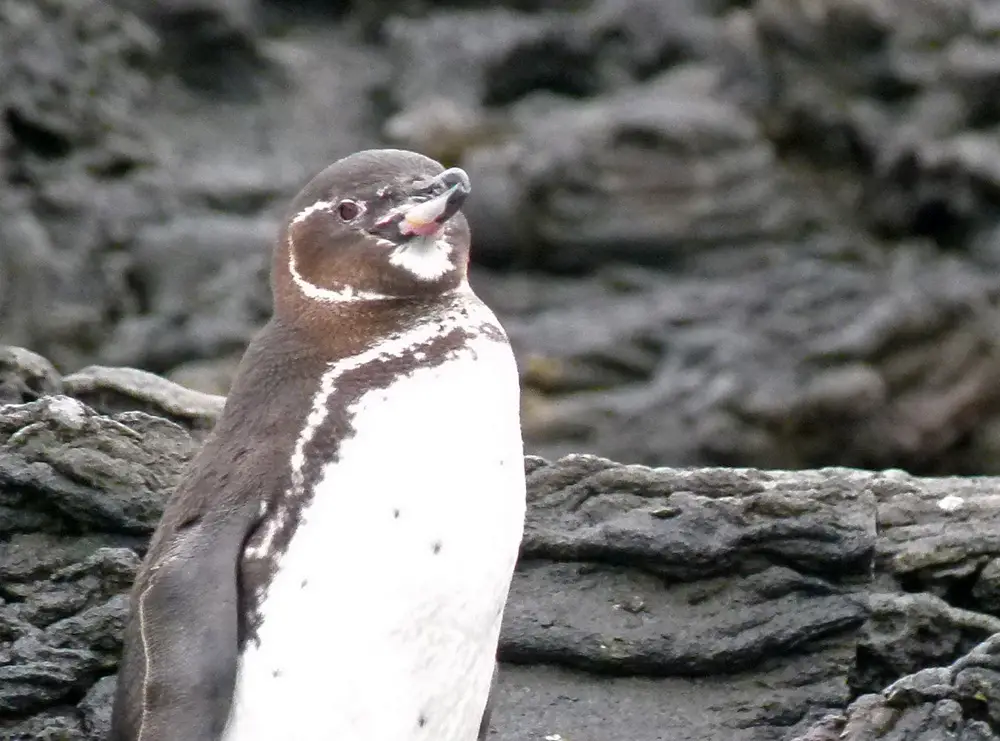
    3. The color of the head is black with a white border.
    4. They have blackish grey and white undersides together with two black lineages that run across its stomach.
    5. The adults are considerably different from their chicks.
    6. The males are greater in size in comparison to the females.
    7. The Galapagos Penguin is the third smallest species of penguin.
    8. These penguins are considered to be endangered species. A significant decline in the population is observed according to the survey conducted in 2004 by the research station.
    9. There are no more than 1,000 breeding pairs all around the world.
    10. The females lay eggs after every 4 days of interval.
    11. The breeding starts when the temperature of the water surface falls below 24oC for the reason that under this temperature, foodstuff becomes available abundantly.
    12. The average lifespan of Galapagos penguins is 10 – 12 years. However, they can live up to 20 years.
    13. These are social and they like humans to approach them but no less than 3 meters of a distance.
    Galapagos Penguin Facts
    Galapagos Penguin

    Galapagos Penguin Distribution Facts

    Apart from other islands, Isabela and Fernandina Islands are the two most common places where these species are seen in large colonies. Almost 90% of Galapagos penguins live in these Islands. Besides, they also live in Santa Cruz, Floreana, Santiago, and Bartolome.

    What do Galapagos Penguins Eat?

    They eat small schooling fish, mainly mullet, sardines, and sometimes crustaceans.

    Facts about Galapagos Penguin Behavior

    1. These birds tend to stay near water in the daylight; however, when the night falls they come out to the land due to the extreme cold weather.
    2. These penguins avoid sun rays and in daylight, they flap their wings to cover their feet for the reason that they can lose heat from their feet.
    3. In order to hide eggs from the sunlight, Galapagos penguins place them under the steep rocks.

    Galapagos Penguin Breeding Facts

    1. The nesting period lasts from May to January.
    2. The nests are built near water shore i.e. 50 m (160 feet).
    3. They are monogamous birds in that they choose their mates for a lifetime.
    4. The period of incubation lasts for 38 to 40 days.
    5. Both males and females are responsible for the incubation process.
    6. The chicks come out after 30 days of their birth.
    7. After 60 – 65 days chicks can take care of themselves.

    Predators

    1. Since Galapagos Penguins are relatively smaller, they have predators like eagles, hawks, owls and snakes.
    2. Other predators include sharks, seals, and sea lions.

     Galapagos Penguins Facts Videos

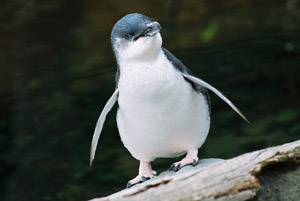
  • Little Blue Penguin Facts for Kids – Fairy Penguin Facts

    Little Blue Penguin Facts for Kids – Fairy Penguin Facts

    This article will help you learn some of the essential little blue penguin facts for kids also known as the fairy penguin. The little blue penguin, belongs to the family of Spheniscidae, is by far the smallest of all the penguin species. These birds are mostly found in the Southern coastlines of Australia. Johann Forster was the first biologist to discover the little blue penguin in the late 18th century. Naturalists hold that these penguins believed to exist more than 2 million years ago. Eudyptula Minor is the scientific name of little penguins.

    Little Blue Penguin Facts for Kids

    1. The average length of these penguins is about 43 cm (17 in), some of which measures around 33 cm (13 in).
    2. Unlike other species, these penguins are called by different names such as Fairy Penguins, and Blue Penguins.
    3. Subspecies of these birds are not confirmed yet.
    4. These penguins weigh around 1.5 kg (3.3 pounds) on average.
    5. The color of the head and underside body is blue.
    6. The wings are blue in color.
    7. It has a grayish black beak.
    8. They can swim with the speed of 6 km per hour.
    9. The female lays 2 eggs between the months of August and November.
    10. The young penguins can fetch a food for themselves after 2 months.
    11. They can swim up to 2.5 km/hour (1.6 mph).
    12. One an average, these species travel almost 80 km per day.
    13. Females as well as the males participate in the incubation process.
    14. The breeding lasts from May to June.
    15. They have the shortest breeding cycle amongst all the species which lasts only for 50 days.
    16. The incubation periods lasts from 33 to 37 days.

    Lifespan of Little Blue Penguin

    1. The average lifespan of these birds is 6.5 years.
    2. Under captivity, little penguins can survive up to 25 years.

    Where do Fairy Penguins lives?

    1. Apart from the Australian coastlines, these birds also exist on the coastlines of New Zealand.
    2. There are more than 20,000 little penguin pairs in the Southern Australia.
    3. In some parts of South Africa and Chile, these species have been reported to exist.
    4. Rough estimates of the little penguin’s population around the world is about 350,000 – 600,000.
    5. These birds are not believed to be endangered species.
    6. In the Southern coastlines of New Zealand, there is a significant decline in the population of these species i.e. 65% to 70%.
    little blue penguin facts
    little blue penguins

    Threats to the Little Blue Penguin

    1. There are quite a few number of predators of these birds, some of the which are dogs, foxes, cats, reptiles, raccoons, and stoats.
    2. Since the number of predators is increasing, the population of little penguins is facing a sheer reduction within few years.
    3. The population has been drastically reducing in the Victoria islands, an estimate tells us that there were more than 5000 species lived initially; however, now the figure has dropped down to just 100 birds.
    4. Reports have recently verified that 40% of the little penguins are eaten by seals.

    Little Blue Penguin Behavior Facts

    1. These birds are very fond of swimming in that they spend most of their daily time under water.
    2. They come out to hunt at the daylight.

    Diet of the Little Blue Penguin

    1. Since they are very small, they tend to hunt tiny insects, fish, and squids.
    2. They are customarily deemed to be the inshore feeders.
    3. They are capable to dive into the 20 meter deep water and remain underwater for about 1 minute.

    Facts about the Reproduction

    1. The males turn out to be mature after 3 years.
    2. They are the monogamous birds in that they tend to remain with their partners for long periods, especially in breeding seasons.
    3. Like other penguins, these species also live in large colonies.
    4. The study of little blue penguin facts tells us that they come back to their colonies at dusk.
    5. One of the largest gatherings of these birds is found in the fox-free islands in Australia.

     Little Blue Penguin Facts Videos

  • African Penguin Facts – African Penguin Diet & Breeding

    African Penguin Facts – African Penguin Diet & Breeding

    This article lays down some of the useful and interesting African penguin facts. These black-footed penguins belong to the family of spheniscidae, are widely available in the African sea-waters. The scientific name of these birds is Spheniscuc Demersus. For the reason that these birds have growling or bragging kind of sound that resembles with a donkey, they had been named as ‘Jackass’ previously.

    At the beginning of the 20th century, the total population was counted to 1.5 million individuals; however, at the end of the century only 10% were left. This implies that the African penguin’s population faced a decline of almost 95% which is, of course, an embarrassing especially figure for humans.

    African Penguin Facts

    Following are the significant insights about the bird:

    1. These birds weigh around 2 – 5 kg (4.4 – 11 lb).
    2. The length of these birds is about 68 – 70 cm (26.7 – 27.5 in).
    3. There are few black patches and spots on its chest that varies from one penguin to the other.
    4. The size of the males is greater as compared to the females.
    5. The males have larger beaks which can be easily distinguished when they’re standing side by side.
    6. The unique coloring on the whole body makes it unreceptive and camouflage against the under-water predators. Since these predators tend to confuse while looking at these birds.
    7.  These are considered as endangered species.
    8. The birds are generally found within 35 km from the sea shore.
    9. African penguins are capable to move at 20 km/h in water.
    10. These species can cover a distance of 30 – 70 km in a single journey.
    11. They can dive into 120 m deep water.
    12. The average swimming speed is 6 km/h.
    13. The average breeding age of these birds is 4 years.
    14. The chicks tend to leave their parents after 6 months.
    15. The clutch size comprised of 2 eggs.
    African Penguin Facts - African Penguin
    African Penguin

    African Penguin Facts about its Distribution and Habitat

    1. These birds are mostly found in the southern and western part of Africa.
    2. There are more than 20 islands on which they exist in colonies. These islands include Namibia, Algoa Bay, and Port Elizabeth, South Africa.
    3. These are the only penguin species that makes its presence feel in Africa.
    4. Some of these colonies were set up by these birds in the start of 1980’s.
    5. These types of penguins are sociable and have a congenial attitude toward humans in that they let people to come up to them but not less than 3 feet.
    6. These species are too shaky to defend themselves against the predators.

    African Penguin Diet Facts

    1. The primary diet of these birds is composed of pelagic fish including anchovies and pilchards.
    2. Small aquatic invertebrates include squid and crustaceans.
    3. The African penguins devour around 540 g of small prey daily. However, it can go up to 1 kg while nurturing their juveniles.
    4. Sardines, mackerel and herrings are also the primary diet of these birds.

    African Penguin Breeding Facts

    1. For the reason that these birds are monogamous, they tend to breed in large colonies of thousands of penguins.
    2. The breeding season lasts for three months i.e. from March to May.
    3. Both male and female contribute toward incubation (keeping warm) process. These birds incubate eggs for 40 days. One of them looks after the chicks for 30 days and then joins (for incubation) afterwards.
    4. The fledging period of chicks depends on the environment and the extent of food resources; however, normally the time during which the chicks fledge is 60 to 130 days.
    5. When the chicks come out, they leave for sea-shore and return back to the colonies after 14 – 22 months.
    6. The average lifespan of these birds is 10 – 26 years. However, in captivity these penguins can survive up to 40 years.
    African Penguin Facts - African Penguin
    African Penguin

    Predators and Threats

    At the start of the 20th century, the estimated population of African penguins was more than 1.3 million, out of which few managed to survive at the end of the century. The population of these penguins has significantly declined during last 3 or 4 decades and it is estimated that 95% of the total species have found to be extinct in Namibia and South Africa. Following are the predators that often hunt these penguins:

    • Orcas
    • Sharks
    • Mongooses
    • Genets
    • Kelp Gull
    • Cape Fur Seals

    African Penguin Facts Videos

  • King Penguin Facts for Kids – King Penguin Diet & Reproduction

    King Penguin Facts for Kids – King Penguin Diet & Reproduction

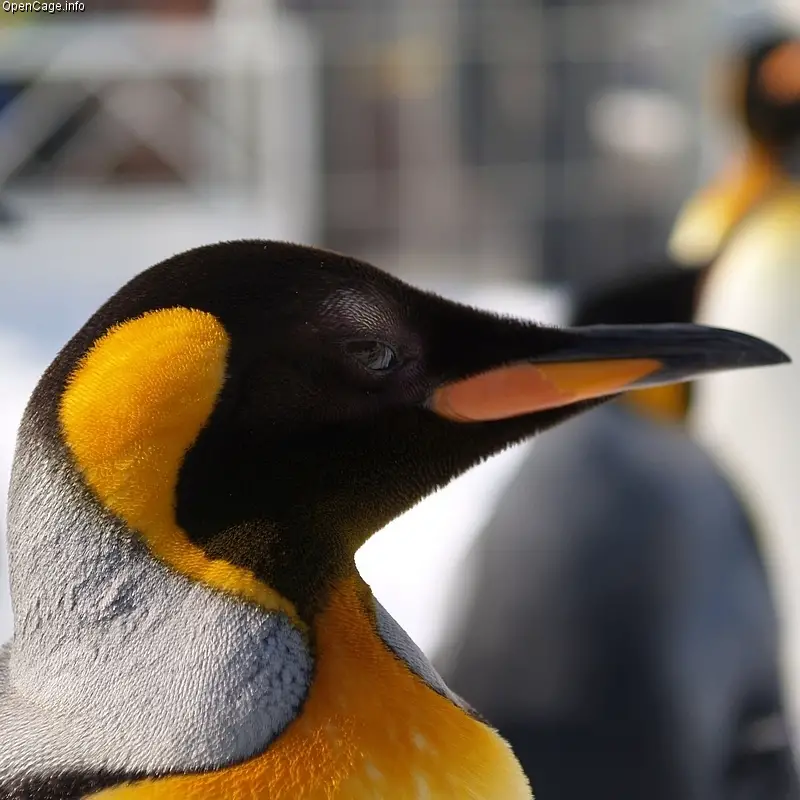
    King penguin facts for kids illuminate some of the useful and rarely known insights. King penguins are certainly the second largest penguin species after the Emperor penguin. These penguins have a gorgeous look in comparison to other penguin species. These birds are also recognized as ‘Wooly Penguins’. This bird loves to live in the cooler regions like Antarctica where the temperature is below zero degrees centigrade all the time.

    King penguins are perfectly adapted to the intense cool climates which are why they are only found in the Polar Regions such as Antarctic and Greenland. These flightless birds are enclosed with thick layers of feathers with an estimate of 70 feathers per square.

    The external layers of penguins are water-resistant which prevents water to enter into the body otherwise their weight would be too much due to water. The chicks do not have oily layer which is why they could not swim until they reach maturity age. The physical appearance, diet, behavior and reproduction; all these and other significant king penguin facts are illustrated below:

    King Penguin Facts for Kids

    1. Like emperor penguins, king penguins akin to live in cooler places like sub Antarctic islands including Georgia, Prince Edward, and Crozet, Southern Indian Ocean or the Southern West of Pacific Ocean; where the maximum temperature does not exceed 10oC.
    2. As far as physical outlook is concerned, these species are closely resembles with the emperor penguins.
    3. The females are heavier and greater in size as compared to the males.
    4. Unlike in any other penguin species, king penguins have orange color ear patches.
    5. The weight of an adult king penguin is about 15 – 17 kg (35 pounds)
    6. The length of these birds measures around 95 cm (3.1 ft).
    7. King penguins incubate (nurture) their eggs in the summer season for the reason that there is an ample food availability in summer as compared to in winter.
    8. Generally, males participate in the incubation process.
    9. While males are engaged in hatching eggs, females spread out in the open air and come back after 2 – 3 weeks. The distance they travel during these days is around 400 km (250 miles) approximately.
    10. Usually, males do not eat anything for 30 days.
    11. The hatching period lasts for only 55 days.
    12. After the chicks come up, males and females are responsible to look after them and keep them warm and the practice continues for about 1 month.
    13. The young penguins become an adult bird after 12 – 14 months.
    14. The average weight of king penguins measure around 15 kg (33 lb).
    15. Apparently, the young king penguins do not look like adults.
    16. There are more than 3 million breeding pairs of king penguins.
    17. Amongst all the other penguin species, these birds have few colorful feathers.
    18. These birds typically reside in colonies.
    19. Non-breeding king penguins do not stay in colonies.
    20. King penguin facts reveal some of the astonishing natures of these birds in that they don’t build nests or piles of stones.
    21. The female lays only two eggs annually. This egg is carried under the wing flap which is known as brood patch (above the feet).
    22. These birds transfer their egg to another partner after taking care for couple of weeks.
    23. These penguins lay eggs in January and November.
    24. The parents feed their young ones for 5 – 6 months.
    25. With chicks under their flap, the birds usually find places where there is no ice since they need to feed their chicks more often.
    26. The age of these species is 30 years in captivity.
    27. These penguins do not return to the same colony; as a result they apt to make new partner for each breeding cycle.
    28. The birds have the ability to dive no less than 50 m (160 ft) deep into the water. However, the diving is found to be 500m (1600ft) generally.
    29. They do not dive in deep water at night.
    30. With such a long physic, these birds easily slide through the water.
    31. Apart from few predators like leopard seals, sharks and the killer whales, the birds do have any significant killer.
    32. The king penguins breed only one time in a year.
    33. These birds do not migrate rather they stay in colony all throughout the year.
    34. King penguin facts show that there are thousands of species in a single colony.
    35. The time during which the birds stay under water is found to be 5 – 8 minutes.

    Read More: King Penguin Facts for Kids

    King penguin facts for kids - King penguin facts
    King Penguin

    King Penguin Diet Facts

    1. Most of the diet comprise of squid, krill, small fish and the lantern fish.
    2. Small crustaceans are also an essential part of their diet.
    3. They place their food 20 to 200 meters underground.
    4. These birds travel several hundred kilometers in search of prey.
    5. They prey in colonies and not alone.

    King Penguin Reproduction

    1. While penguins turn out to be  mature and energetic, they also become more sociable than before.
    2. For the reason that they dwell in colonies, the privacy of an individual bird does not last long.
    3. The bird tends to perform unusual activities and producing strange sounds in order to attract its partner.
    King penguin facts for kids - King penguin facts
    King penguin facts

    How to Identify King Penguin?

    You can identify king penguin from the following facts related to its habitat, physical appearance and behavior.

    Habitat

    Apart from its unique appearance and exclusive characteristics, king penguin can easily be recognized by its habitat. They are more likely to be found in the sub Antarctic islands such as Marion Islands, Macquarie Islands, and Falkland Islands.

    Physical Appearance

    As far as the physical appearance is concerned, king penguin exhibits greenish-black throat color. The abdominal portion reflects pure white color.

    Behavior

    The study carried out by the University of California which implies that the king penguin has an inimitable behavior. Unlike other species, these birds can go by couple of weeks without eating anything.

    Unbelievable King Penguin’s Behavior

    While going through the king penguin facts, a strange and unique behavioristic trait was identified in the king penguin which is illustrated as:

    1. A study was carried out by the Polairen Franc University under the program of ECOPHY to explore one strange king penguin’s behavior. The young penguins were observed to intake feeding from the adults who were not their actual parents. The process is known as allofeeding.
    2. When king penguins feed the juveniles, it was a temporary which in turn gives rise to the allofeeding. Allofeeding rarely involves full adoption of chicks.
    3. Allofeeders once feed the chicks; they don’t repeat the process; the new pair or an individual starts allofeeding (feeding by non-parents).

    The researchers scrutinized more than 100 breeding pairs together with 70 chicks in one year. Allofeeding in king penguins is not an uncommon; however, there are five factors that affect allofeeding:

    • The breeding conditions of the sample population were usual.
    • The common cause of allofeeding was due to the low parental provisioning.
    • If the chicks demand more feed, allofeeders did not respond.
    • Allofeeders were mostly non-breeding king penguins even though breeding penguins infrequently allofed.
    • Suboptimal parental care.

    King Penguin Videos

  • Penguin Facts for Kids – Amazing and Interesting

    Penguin Facts for Kids – Amazing and Interesting

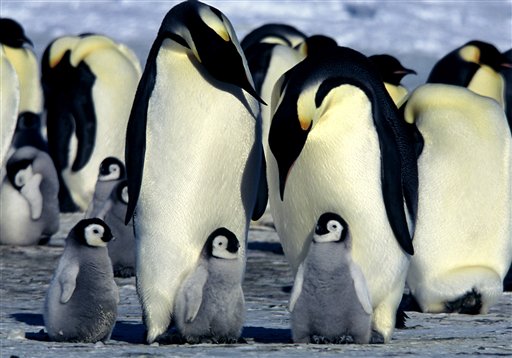
    This article lays down the most amazing Penguin Facts for kids that your kid would definitely love to know. Penguin is an aquatic and flightless bird that has wings more like fins which help them to swim.

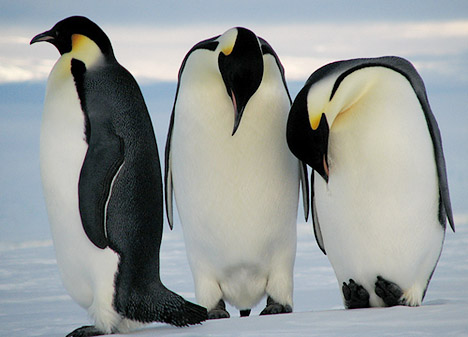
    Emperor penguins are the largest living penguin species belonging to the aquatic group. These flightless birds are usually found in the coolest areas of the world such as the Antarctica. Emperor penguins are accustomed to live in water and these birds have wings (more like fins) which helps them to maintain a sheer balance while walking and swimming. With the help of these wings they swim at a rapid pace and it gives the same view as the birds flying in the air.

    Penguin Facts for Kids

    So far as the appearance of these birds is concerned there is a clear demarcation line that separates the two colors (black and white). For feeding emperor penguins usually take on krill, squid and other fishes. Half of their entire life is spent under water where they take on their hunt and the remaining time on the land. Apart from living in cool areas these flightless birds also exist under the moderate temperature, though rare.

    three emperor penguins in antarctica - emperor penguin facts for kids
    Emperor Penguin
    • In the prehistoric times there were penguins of almost equal in size and weight as that of adult humans.
    • However the smallest penguin species are known as Fairy Blue Penguins with the height of just 40 cm (16 inch) and weighing around 1 kg (2.2 lb).

    Learn more: Emperor Penguin Facts For Kids

    More Penguin Facts for Kids

    1)      The average length of these birds is about 1.1 m (3 feet 7 inch) with the weight of 35 kg (75 lbs).

    2)     The outer look of all penguins are such that it completely disguises its predators (especially those under water such as seal) since the penguins’ back is fully black as against the front which is white it becomes very difficult for the predator to make a distinction between a belly and the water surface.

    3)     Penguins under water have the average speed of about 6-10 km/h (3 to 7.5 mph). However some sources reveal that the speed is 27 km/h (17 mph).

    4)     Unlike bigger penguins the smaller ones do not dive deep into the water and they usually catch the prey at the surface. Their maximum diving duration is about 2 minutes.

    5)     When it comes to the larger penguins they are capable of diving in depth of about 565 m (1870 feet). Their duration lasts up to 22 minutes which is why they have enough opportunity to catch their prey at ease.

    6)     Emperor penguins usually slip through the ice with their belly and the sliding is known as ‘Tobogganing’. This sliding helps in conserving energy whilst moving rapidly.

    7)     These penguins jump with both feet which is usually needed when running from the predators.

    8)    As far as hearing senses are concerned emperor penguins are not so good in that they’ve the average sense that is typically used to find out the parents or kittens in congestion.

    9)     However, when it comes to seeing under water they are the best for sure perhaps due to the reason that it is the only means by which penguins detect their killers.

    10)  Penguins’ feathers are thick so much so that they keep them warm even in the extreme temperatures of minus 50 degree centigrade. Sources reveal that these flightless birds lose heat more in water as compared to the air.

    11)  The mass of the emperor penguins are the greatest when compared to other penguins.

    12) They have the strange ability to control the blood flow while pushing down the colder blood to survive in the extreme weather.

    13)  The body color is absolute black from the back while the front is white and has yellow beaks.

    14) Their relationship with humans is an awfully friendly and they are not hesitant to approach them as a matter of fact they march towards explorers in groups showing a bit gracious attitude. The reason may be that they are not often hunted at land by their predators.

    15)  Under water emperor penguins are mostly predated by the leopard seal.

    16) Normally, it has been observed that these flightless birds keep a distance of about 3 meters (10 feet) from the source. Since nervousness starts beyond this point.

    17) They are capable of drinking salt water for the reason that they have supraorbital gland which separates out the excess salt from the blood.

    18) Unlike other species emperor penguins have relatively a different phenomenon in that the males are usually responsible for looking after the eggs.

    19) Most of the time emperor penguins breed in large colonies which indeed helps them to socially interact with the birds.

    20) As compared to other birds penguin eggs are smaller in size with the weight of 52 g (2 0z). However, emperor penguin eggs are much heavier in that the weight is about 450 g (I lb). There is also the larger percentage of yolk that is to say 22-31% of the egg.

    21) One of the strange intuitions of these penguins is that the females seem to whip off the chicks from other mothers though most of the time the attempt is made unsuccessful by the original mothers.

    If your kid is showing interest in theses penguin facts then why not surprise him today by showing him some penguin movies. Following is the list of some of the best penguin movies that your kid will love to watch and will be an amazing learning experience.

    1. Happy Feet

    2. Mr. Popper’s Penguins

    Penguin Facts for kids | Video

  • Large Flightless Birds – Ostrich, Emu Bird, Cassowary Bird

    Get to know about the large flightless birds with pictures, descriptions and videos. A flightless bird is a bird which cannot fly and depends upon its ability to walk, run or swim. The two major differences between flying and flightless birds are that their wings are smaller in size as compared to that of flying birds and the keel (a bone to which muscles needed for flying are attached) is slightly reduced or absent in them.

    Large Flightless Bird

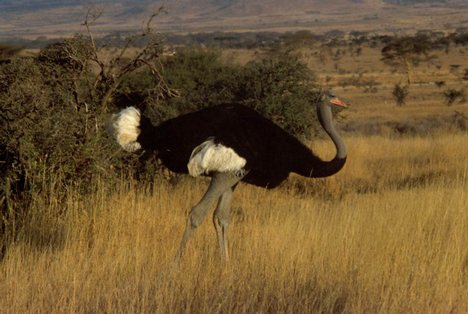
    Ostrich is the large flightless bird found in Africa. Its diet comprises of insects and some plants. They have no teeth. The colours of ostriches differ from male to female. The female ostriches have greyish-brown and white feathers while the male ostriches have black and white feathers with a white tail. They have a long bare neck covered with a thin layer of down feathers. Their legs are very long and feet strong enough that it can attack its enemy with a kick.

    Large Flightless Birds - ostrich
    Large Flightless Birds – ostrich

    Interesting Ostrich Facts

    Emu Bird – The Second Large Flightless Bird

    Emu birdis the second large flightless bird in the world that is found in Australia. They can run and swim. They are found in grasslands and savannas in the form of flocks. They feed on plants and some insects.

    Emu Bird in Forest - large flightlessbirds
    Emu Bird Facts

    Cassowary Bird – The Third Large Flightless Bird

    Cassowary is the third large flightless bird with small wings found in northeastern Australia. They can be identified by a head without feathers and a characteristic bony structure named as horny crest which is present on their head. Their legs are very much powerful and their feet are very strong covered with three toes having sharp claws used as primary defense organs.

    cassowary - large flightless birds

    Kiwi Bird – The Endangered and Indigenous Bird

    Kiwi bird is a chicken size insectivore flightless bird. It is found in New Zealand. It has a long pointed bill, small wings which cannot be used for flying. Kiwi birds have characteristic short legs with sharp claws which are used for running and digging the ground for their food i.e. insects etc. It is commonly found in forests, farmlands and grasslands. Here at birds flight we have huge collection of beautiful  kiwi bird pictures.

    Rare White Kiwi Chick Pictures
    White Albino Kiwi Chick (Rare White Kiwi Chick Pictures)

    The Tasmanian Native Hen

    Tasmanian native hen is a flightless bird found only in Tasmania. It has a large and heavy body. Its bill is large and yellow in color. The head and back of the Tasmanian hen is covered with brown feathers whereas the under parts of the body is covered with grey feathers. Its eyes are red in color. The legs are powerful and grey in color. They are mostly found in damp habitats particularly in pastures, dams, swamps, and rivers. They feed on vegetation, leaves, seeds and insects.

    Tasmanian Native Hen
    Tasmanian Native Hen

    Penguins – The Aquatic Large Flightless Birds

    Penguin is a flightless bird found in southern hemisphere, especially in Antarctica. It is an aquatic flightless bird having flipper like wings which help them in swimming rather than flying. Penguins have dark and white feathers .They feed on fish, squids and other aquatic animals.

    Large flightless birds Penguins
    Adelie Penguin

    More Penguin Facts

    Flightless birds video

    A funny cartoon story of a flightless Bird.

  • Largest Bird in the World – The Ostrich

    Largest Bird in the World – The Ostrich

    This article is going to discuss about the largest bird in the world, living and extinct both. The word small has been associated with birds for a long time but there are birds that cannot be called small, with some large enough even surpassing the size of the largest living man on earth. Birds can primarly be classified as the largest bird based on their length, height, weight and wingspan size. So when we classify birds as the largest bird in the world or the biggest bird in the world it is mainly based on its size and weight.

    The Largest Bird in the World

    Ostrich is the largest bird in the World with record setting height and weight:

    • Height  — more than 9 feet (2.7 meters)
    • Weight — more than 345 lbs. (156 kg)

    Largest bird Flightless bird ostrich | largest bird in the worldOstrich is a large flightless bird, native to the continent of Africa and can be easily identified by its distinct appearance of long legs and neck. It is not only the largest bird in the world but also:

    • The fastest running bird in the world with maximum speed of 60.6 mph (97.5 km/h)
    • and lays the largest egg in the world weighing 3lbs. (1.4 kg)

    Largest Bird in the World that have become Extinct

    • Elephant bird, native to Madagascar, has been the largest bird in the world  known to man through fossil record. It became extinct about 300 years ago. Its height was more than 10 feet (3 meters) and weighed more than 1,120 lbs. (500 kg).
    • Giant Moa native to New Zealand was the tallest bird ever with a height of up to 12 feet (3.7 meters) and weighed 50% less than the elephant bird.
    • Brontornis native to South America was the largest predatory and flightless bird with height of about 9 feet 2 inches (2.8 meters) and weighed about 770 to 880 lbs. (350 to 400 kg).
    • Argentavis magnificens was the largest bird ever capable of flight with huge wingspan of about 28 feet (8.3 meters), length of more than 10 feet (3 meters) and weighed about 175 lbs. (80 kg).

    More Facts about Ostrich

    List of some Largest Bird in the World among the different Species

    Birds

    Wingspan

    Length

    Weight

    Waterfowl (Trumpeter Swan)

    10 feet (3 meters)

    6 feet (1.82 meters)

    38 lbs. (17.3 kg)

    Swift & Allies

    10 inches (25 cm)

    8 oz. (225 grams)

    Nightjars & allies

    2 feet (60 cm)

    1.5 lbs. (680 grams)

    Shore Birds (Great Black-backed Gull)

    34 inches (85 cm)

    5.5 lbs. (2.5 kg)

    Herons & allies (Andean Condor)

    10.7 feet (3.2 meters)

    33 lbs. (15 kg)

    Mousebirds

    14 inches (35 cm)

    2 oz. (60 grams)

    Pigeons (Victoria Crowned Pigeon)

    34 inches (85 cm)

    8.2 lbs. (3.7 kg)

    Kingfishers & allies (Southern Ground Hornbill)

    4 feet (1.2 meters)

    13.5 lbs. (6 kg)

    Cuckoos & allies (Great Blue Turaco)

    74 cm

    1.2 kg

    Birds of Prey (Eurasian Black Vulture)

    10 feet (3 meters)

    47 inches (119 cm)

    31 lbs. (14 kg)

    Gamebirds (Wild Turkey)

    52 inches (130 cm)

    31 lbs. (14 kg)

    Loons (Yellow-billed Loon)

    3.3 feet (1 meter)

    15.4 lbs. (7 kg)

    Cranes & allies (Great Bustard & Kori Bustard)

    5 feet (1.5 meter)

    46 lbs. (21 kg)

    Songbirds (Common Raven & Thick-billed Raven)

    28 inches (70 cm)

    3.3 lbs. (1.5 kg)

    Cormorants & allies

    11.5 feet (3.5 meters)

    6 feet (1.82 meters)

    33 lbs. (15 kg)

    Flamingos

    5 feet (1.5meters)

    8.8 lbs. (4 kg)

    Woodpeckers & allies (Toco Toucan)

    30 inches (75 cm)

    2.2lbs. (1 kg)

    Grebes

    32 inches (80 cm)

    4.4 lbs. (2 kg)

    Tubenoses

    12 feet (3.63 meters)

    4.6 feet (1.44 meters)

    35 lbs. (13.8 kg)

    Parrots (Hyacinth Macaw)

    4 feet (1.2 meters)

    4.4 lbs. (2 kg)

    Sandgrouse (Black-bellied Sandgrouse)

    18 inches (45 cm)

    1.4 lbs. (634 grams)

    Penguins (Emperor Penguin)

    4.3 feet (1.35 meters)

    102 lbs. (46 kg)

    Owls (Eurasian Eagle Owl & Blakiston’s Fish Owl)

    32 inches (80 cm)

    10 lbs. (4.5 kg)

    Tinamous (Grey Tinamou)

    22 inches (55 cm)

    4.4 lbs. (2 kg)

    Trogons (Resplendent Quetzal)

    14 inches (35 cm)

    8 oz. (225 grams)

    When birds are classified largest according to the length, weight, height and wingspan separately then we will have different birds classified as the world’s largest bird according to that specific anatomy.

    Largest Bird in the World | Video

");pageTracker._trackPageview();